Electronics shop billing software: serial numbers, EMI and the bill a customer keeps for years
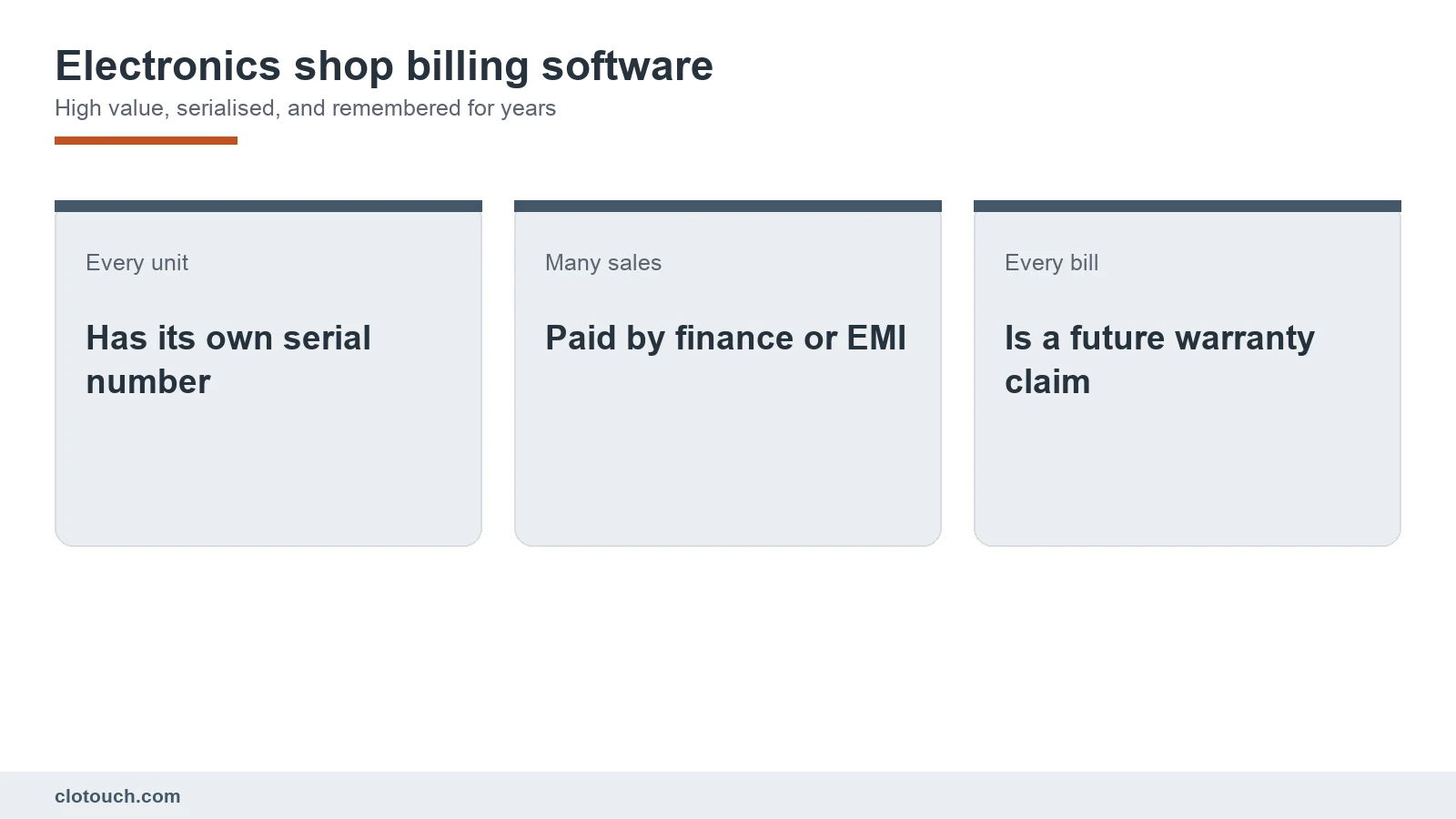
An electronics shop sells fewer items than a grocery store and far more money per bill. Every unit carries a serial number, a large share of sales go through finance, and the bill comes back two years later attached to a warranty claim. Electronics shop billing software has to treat each unit as an individual, and a general billing system often does not.
The cost of getting this wrong is rarely felt at the counter. It is felt during an audit, a finance reconciliation or an angry warranty call.
On this page
Every unit is an individual
Ten identical refrigerators are ten separate items for service purposes. Each has a serial number, and the manufacturer’s warranty follows that number, not the model.
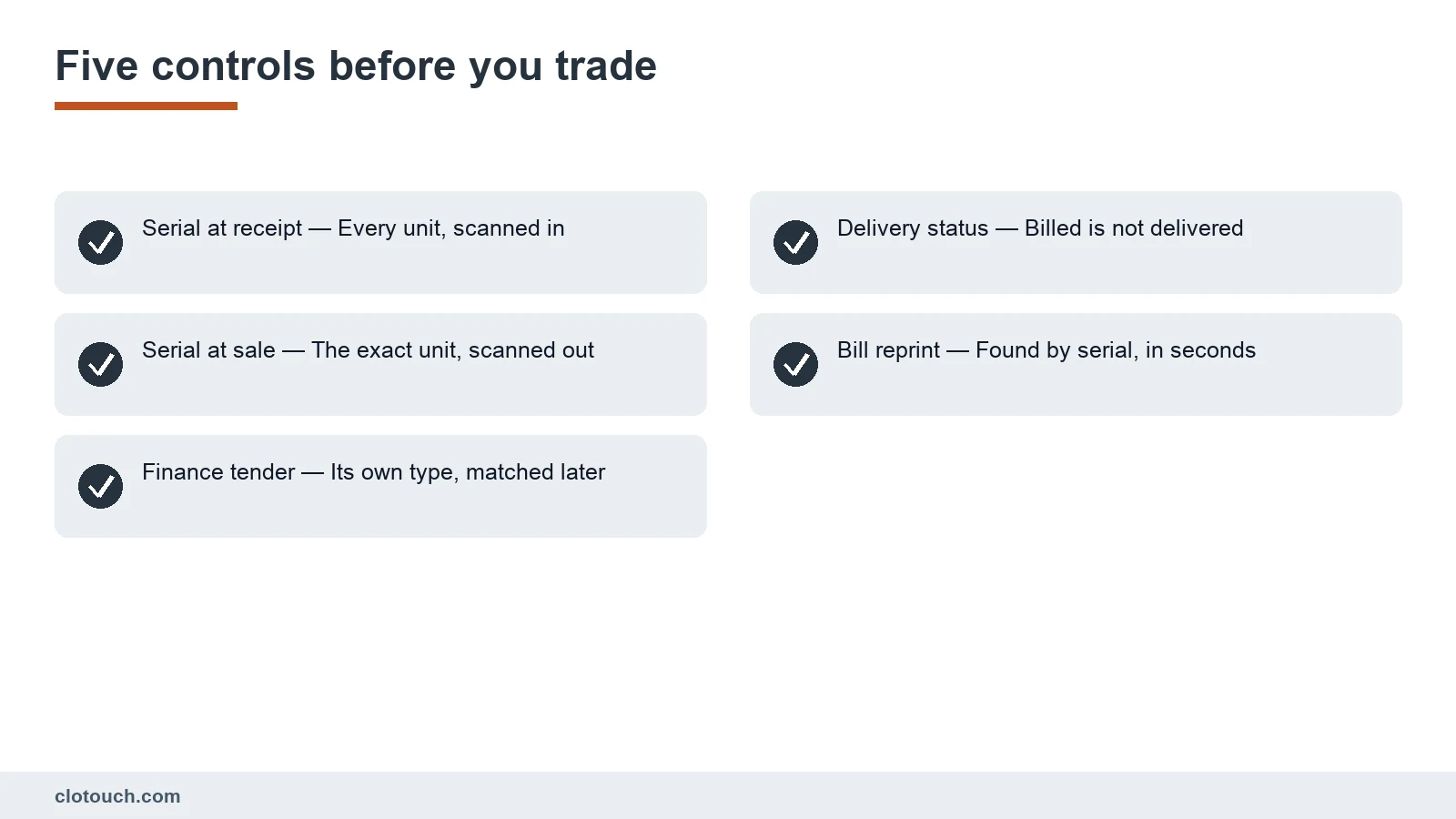
Capture the serial at goods receipt and again at sale. The receipt scan proves the unit came in. The sale scan proves which unit left with which customer.
Skipping the receipt scan is the common shortcut. It works until a unit goes missing and nobody can say whether it was ever received, sold or simply misplaced in the godown.
Finance and EMI sales
A large share of electronics sales in India are financed. The customer pays a down payment, a finance company pays the rest later, and the shop’s books have to show both.
| Payment | What the bill shows | What to match later |
|---|---|---|
| Full payment | One tender | Drawer, card or UPI settlement |
| Consumer finance | Down payment plus finance amount | Finance company payout, net of charges |
| Card EMI | Card tender, EMI flagged | Card settlement and any subvention |
| Exchange offer | Old unit value as a tender | The old unit, physically received |
Record the finance amount as its own tender type, owed by the finance company. Then reconcile their payouts against those bills. Where finance is booked as cash, the drawer is wildly short and the receivable is invisible.
Subvention and processing charges deducted by the finance company belong in the books too. They reduce the real margin on the sale, sometimes significantly.
Exchange offers
An exchange offer takes an old unit in part payment. The old unit’s value is a tender on the new bill, and the old unit itself becomes stock, usually of a different kind.
Record what was received, its condition and what was credited. Exchanged units that are never recorded tend to leave the shop quietly, and the exchange value becomes an unexplained discount.
Billed is not delivered
Large appliances are billed at the counter and delivered later, often with installation. The bill and the delivery are separate events with separate risks.
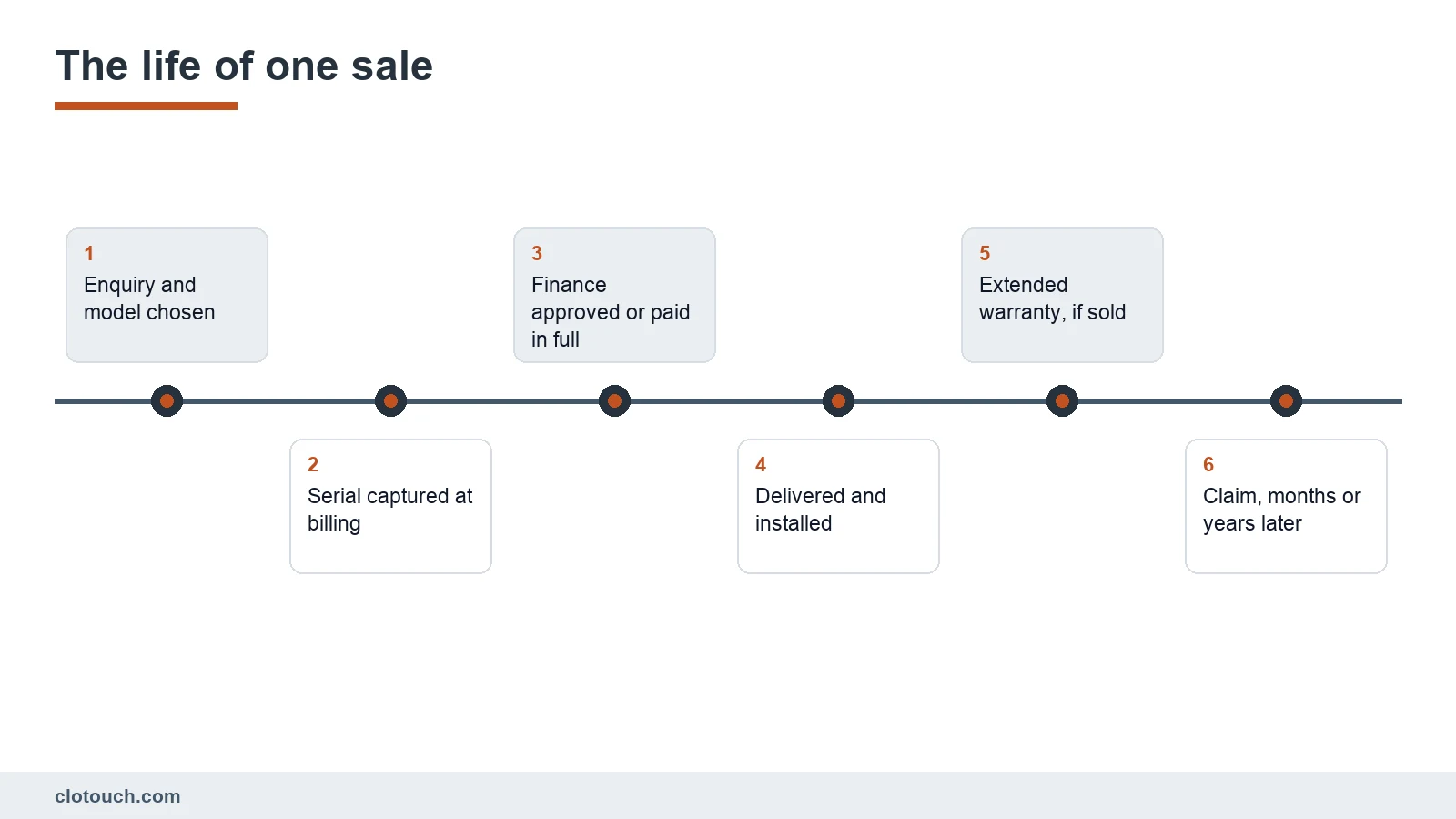
Track delivery status against every bill. A unit billed but not delivered is still in your godown, and counting it as sold makes your stock look smaller than it is. A unit delivered but not billed is worse, and it does happen during festive rushes.
What electronics shop billing software must print
The customer will keep this bill for years and produce it to a service centre. It needs everything a warranty claim asks for.
- Model and serial number of every unit, printed clearly
- Date of sale, which starts the warranty clock
- Any extended warranty sold, with its own term
- Your GST details, so the bill is a valid tax invoice
- A bill format that survives being photocopied
Thermal receipts fade. For electronics, print on paper that lasts, or send a digital copy as well. A customer whose bill has faded blank will blame the shop, not the printer.
Finding a bill by serial number
Warranty calls arrive with a serial number, not a bill number. The customer reads it off the back of the machine, often without the bill in hand.
The system should find the bill from the serial in seconds. Searching by customer name across two years of bills is slow, and many customers buy more than one unit.
Stock that is worth counting often
Electronics stock is high value and low count. Counting it is quick, and doing so weekly for the expensive lines costs little.
Count by serial, not by quantity. A count that says ten televisions when the serials show nine present and one unknown is a very different finding from a count that just says ten. Your stock records can only answer that if serials were captured at receipt.
What to test in a demo
- Receive three units of one model by serial, then sell the second one
- Bill a financed sale and check the finance amount is a receivable
- Take an exchange unit as part payment and see it recorded
- Mark a bill as delivered a day later
- Find the bill using only the serial number
Electronics shop billing software that passes these five handles the trade’s real difficulty, which is following individual units and the money behind them. The back office then shows finance receivables and undelivered units, which together explain most month-end surprises.
Frequently asked questions
Why does an electronics shop need serial tracking?
Because warranty follows the serial number, not the model. Capturing it at goods receipt proves the unit arrived, and capturing it at sale proves which unit went to which customer. Without both scans, a missing unit cannot be traced and a warranty claim cannot be checked.
How should finance and EMI sales be recorded?
Record the down payment as the customer’s tender and the financed amount as a separate tender owed by the finance company. Reconcile the finance company’s payouts against those bills, and record subvention or processing charges, since they reduce the real margin.
How should exchange offers be handled?
Treat the old unit’s value as a tender on the new bill, and record the old unit as received stock with its condition. Exchanged units that are not recorded tend to disappear, leaving the exchange value as an unexplained discount.
What must an electronics bill show?
Model and serial number of every unit, the date of sale, any extended warranty with its term, and your GST details. Print it on paper that lasts or send a digital copy, because customers produce these bills to service centres years later.
Why track delivery separately from billing?
Large appliances are often billed today and delivered later. A billed but undelivered unit is still in your godown, so treating it as gone distorts stock. A delivered but unbilled unit is a loss, and festive rushes are when it happens.
Sources, method and author
Written around how an electronics counter actually trades: serialised stock, financed sales, exchange offers and delayed delivery. The finance treatment follows ordinary receivables practice. The bill contents reflect what a service centre asks for when handling a warranty claim. No finance company terms or rates are given, because they vary by scheme and lender.
- CBIC GST — tax invoice requirements
- National Consumer Helpline — warranty and after-sales complaints
- Reserve Bank of India — rules for consumer credit and EMI products
Clotouch is a point of sale product built by Clonet Technologies Pvt Ltd. This guide describes what to test in any system for an electronics shop, including ours. It is not tax, legal or financial advice.
Author. Aman Raj. Published 1 November 2026 for Clonet Technologies Pvt Ltd, Bengaluru.