Cash drawer management: the float, the count and the small differences that add up
Every shop that takes cash loses a little of it. Not to theft, usually, but to short change given in a hurry, a sale rung on the wrong tender type and a float that nobody counted this morning. The fix is not suspicion. It is a routine, and the billing system should carry most of it.
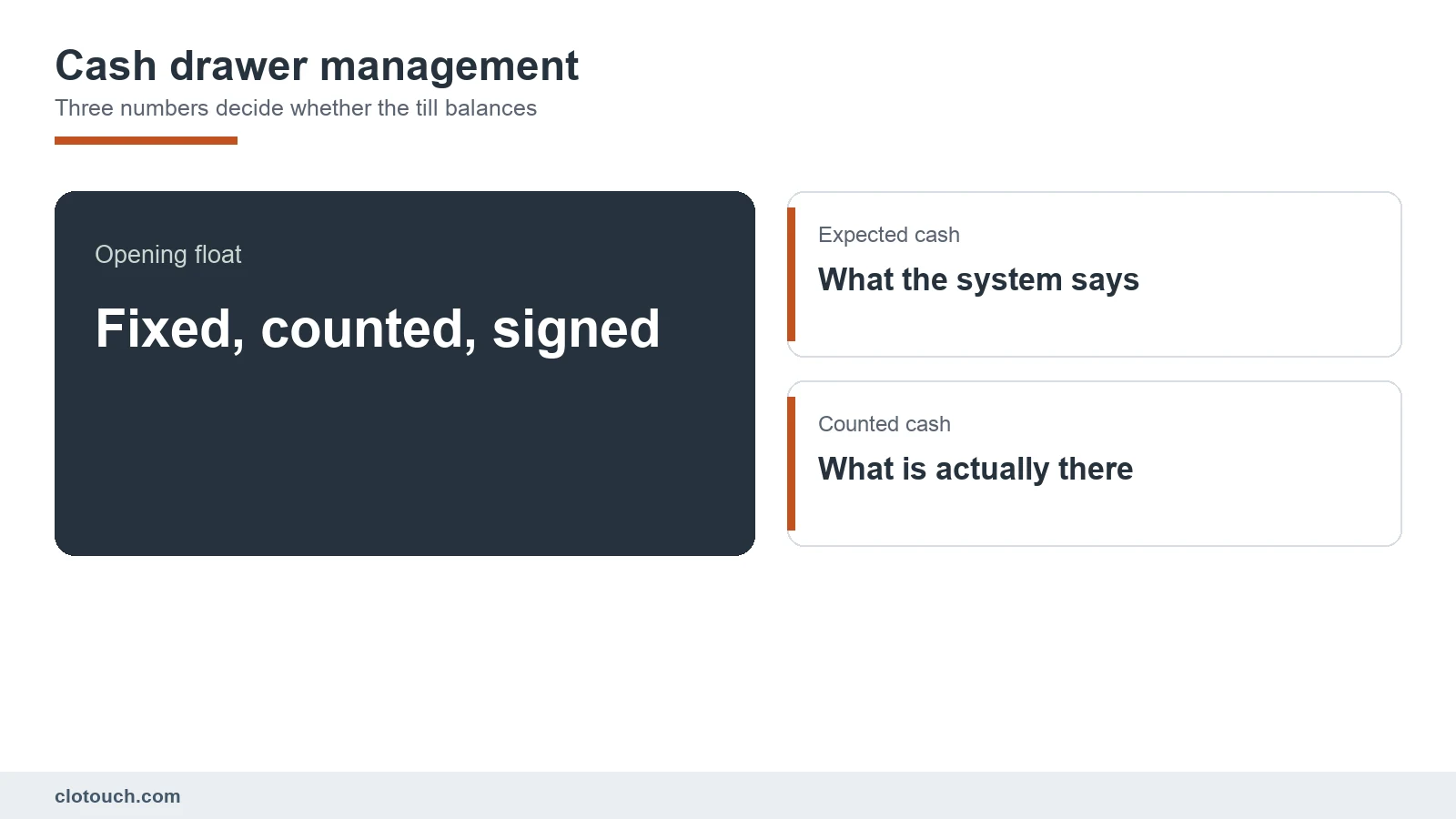
Cash drawer management comes down to three numbers and one habit. The float you started with, the cash the system expects, and the cash actually in the drawer. The habit is counting without looking at the expected figure first.
On this page
Cash drawer management starts with a fixed float
A float is the change you begin the day with. Fix the amount and the denominations, and keep both the same every day. Two thousand rupees made up of a set number of tens, twenties, fifties and hundreds is easier to count and easier to check than a vague handful.
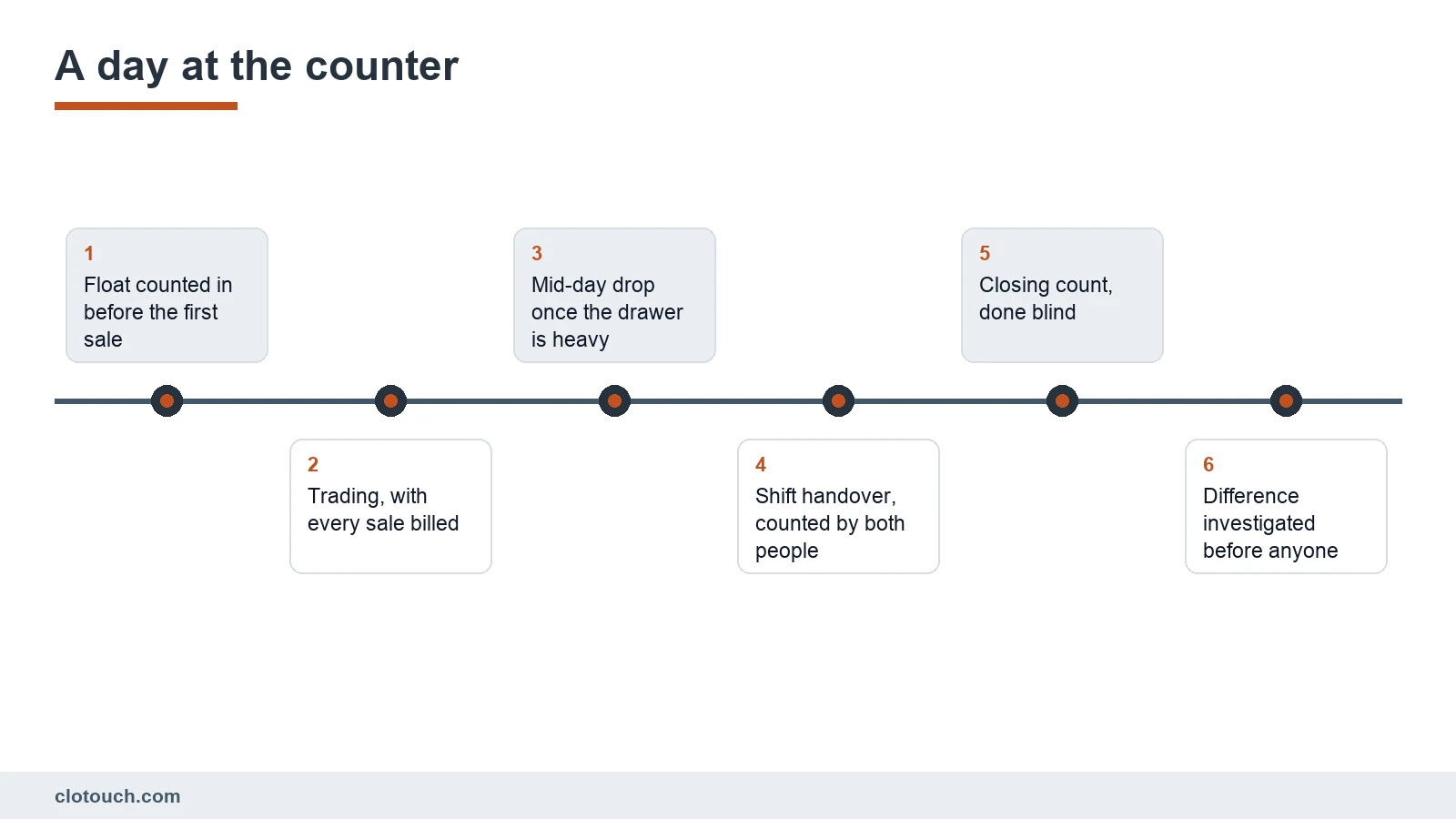
The float is counted in before the first sale, by the person taking the till. If it is short on arrival, that is a finding for yesterday, not a problem for today. Recording it at that moment is what keeps the two days separate.
Size the float to your busiest hour, not your quietest. A counter that runs out of ten-rupee notes at six in the evening loses more in queue time than the float ever cost to hold.
The system has to know the tender type
A bill closed as cash when the customer paid by UPI will make the drawer look short by exactly that amount. This is the single most common cause of a difference, and it is not dishonesty. It is a cashier pressing the nearest button during a rush.
Two settings prevent most of it. Make tender type a required choice rather than a default. And allow split payments, so a bill paid partly in cash and partly by card is not forced into one bucket.
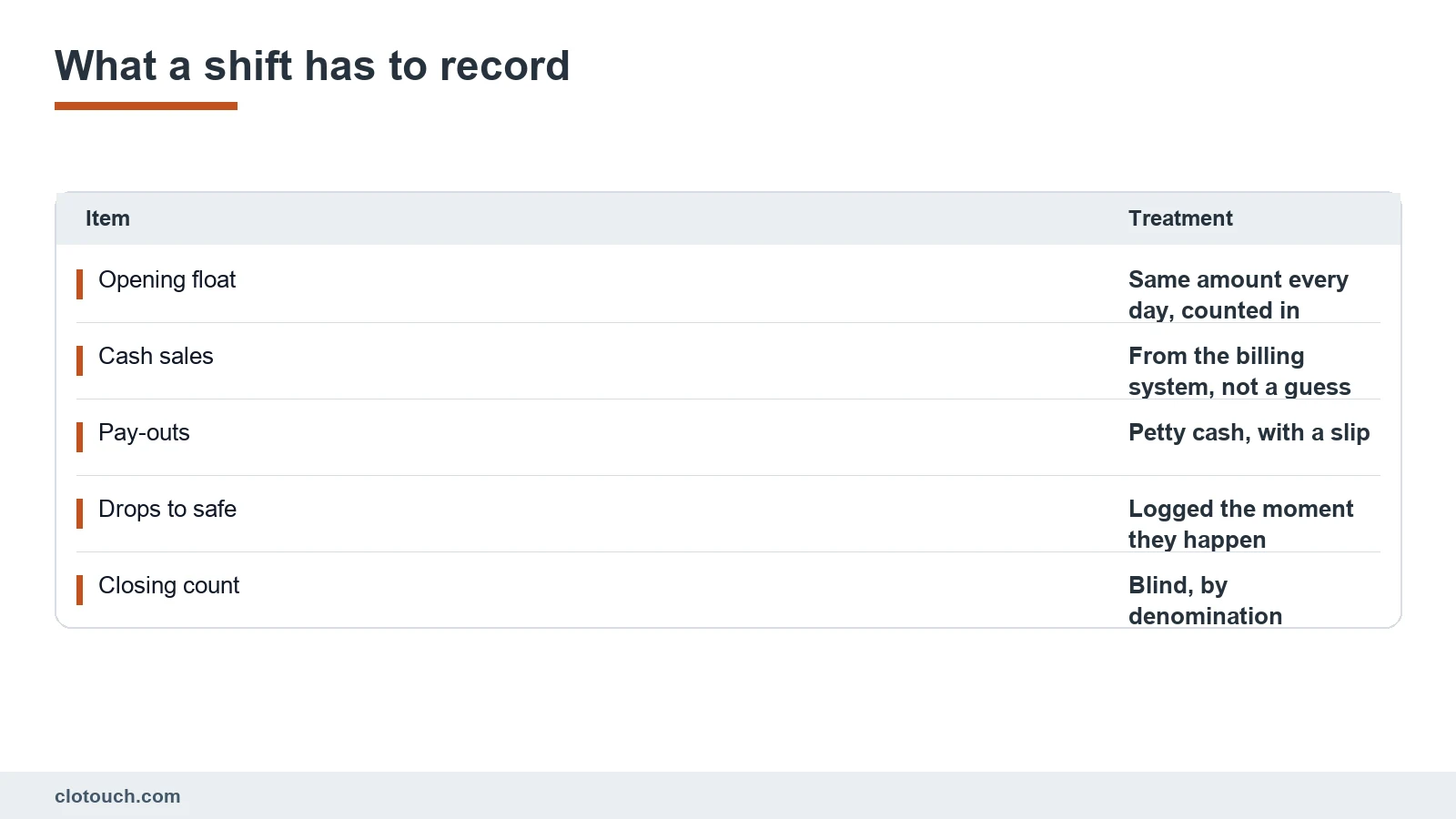
Pay-outs need the same discipline. Money leaving the drawer for a delivery, a repair or tea is still money leaving. If there is no pay-out entry, that cash becomes a shortage with no explanation attached.
Count blind, then compare
A blind count means the person counting cannot see what the system expects. They count the drawer by denomination, enter the total, and only then does the system show the difference.
This matters more than it sounds. Shown an expected figure first, people count towards it, recount only when they are short, and stop as soon as the numbers agree. A blind count is the only version that produces an honest number.
| Difference | Usual cause | Where to look |
|---|---|---|
| Short by a round amount | A bill marked cash but paid digitally | Tender type on that hour’s bills |
| Short by small odd amounts | Change given in a hurry | Peak hour, denomination mix |
| Over by a round amount | A digital payment rung as cash in reverse | Same hour’s tender split |
| Short every day, similar size | Float not counted in | Opening routine |
| One large difference | A pay-out with no slip | Pay-out register |
Drops, and why a heavy drawer is a risk
A drawer holding a full day of takings is a target and a liability. Set a ceiling, and when the drawer passes it, drop the excess to a safe and record it. The drop is a transaction, not a favour.
For most counters one mid-day drop is enough. A busy restaurant on a weekend may want two. The number matters less than the fact that it is written down and the amount is counted by someone.
Shift handover is a count, not a conversation
If two people use one drawer across a day, the till has to be counted and closed at the handover. Otherwise a difference belongs to both of them and can be investigated by neither.
- Close the shift in the system, so the expected figure is fixed at that moment
- Count blind, by denomination, with both people present
- Record the difference even when it is zero
- Reset the float to the standard amount for the next shift
- Sign the sheet, on paper or on screen
Where one person covers the whole day, the handover step disappears, but the close does not. A shop with multiple counters or outlets needs this per till, which is where multi-store control starts to earn its keep.
Deciding what counts as a problem
Not every difference deserves an investigation. Good cash drawer management sets a tolerance in rupees and writes it down. Anything inside it gets recorded and left alone. Anything outside it gets looked at the same day, while the bills are still fresh.
The useful number is not any single day. It is the pattern over a month, which your back office reports can show by till and by person without anyone having to accuse anybody.
Setting it up this week
- Fix the float amount and its denomination mix, and write both on a card in the drawer
- Make tender type compulsory at billing and enable split payments
- Add a pay-out entry type, with a reason field
- Switch the close to a blind count by denomination
- Set a rupee tolerance and review differences monthly, not daily
None of this is software you have to buy. It is five settings and one routine. Done properly, cash drawer management stops being a source of suspicion and becomes a report nobody argues with.
Frequently asked questions
What is a cash float and how big should it be?
A float is the change the till starts the day with. Fix both the amount and the denomination mix, and keep them the same daily so counting is quick. Size it for your busiest hour, because running out of small notes during a rush costs more in queue time than holding the float costs you.
Why does the drawer come up short even when nobody is stealing?
The usual cause is tender type. A bill closed as cash when the customer paid by UPI or card leaves the drawer short by exactly that amount. Making tender type a required choice, and allowing split payments, removes most differences before they happen.
What does counting blind mean?
The person counting cannot see the figure the system expects. They count by denomination, enter the total, and the difference appears afterwards. Shown the expected figure first, people unconsciously count towards it and stop once the numbers agree, which hides the real position.
How often should cash be dropped to the safe?
Set a ceiling for how much the drawer may hold and drop the excess when it is passed. One mid-day drop suits most counters, two suits a busy restaurant at the weekend. What matters is that each drop is counted and recorded as a transaction.
Should every difference be investigated?
No. Set a rupee tolerance and write it down. Record everything, investigate only what falls outside the tolerance, and do it the same day while the bills are fresh. The pattern over a month, by till and by person, is more useful than any single day.
Sources, method and author
Written as a counter routine rather than a software feature list. The controls described, a fixed float, compulsory tender type, recorded pay-outs and drops, a blind count and a written tolerance, are standard cash handling practice scaled to a single shop. The causes listed in the difference table are the ones that account for most unexplained shortages in small retail, and they are process faults rather than losses.
- Investopedia on internal controls — why separation and recording matter more than trust
- Reserve Bank of India — currency handling and denomination guidance
- NPCI — UPI, the payment type most often mis-recorded as cash
Clotouch is a point of sale product built by Clonet Technologies Pvt Ltd. The routine here works in any billing system that records tender type, pay-outs and a shift close, including ours. It is not accounting advice.
Author. Aman Raj. Published 12 October 2026 for Clonet Technologies Pvt Ltd, Bengaluru.