Gift cards and vouchers: money you have taken for goods you have not sold
A customer hands over two thousand rupees and walks out with a card. Nothing has been sold. The shop has the money and owes goods, and most counters record it as a sale on the spot. Your billing system should not let that happen.
Getting this wrong inflates the day’s revenue and understates it later, which makes every month-on-month comparison a fiction.
On this page
Issue is not a sale
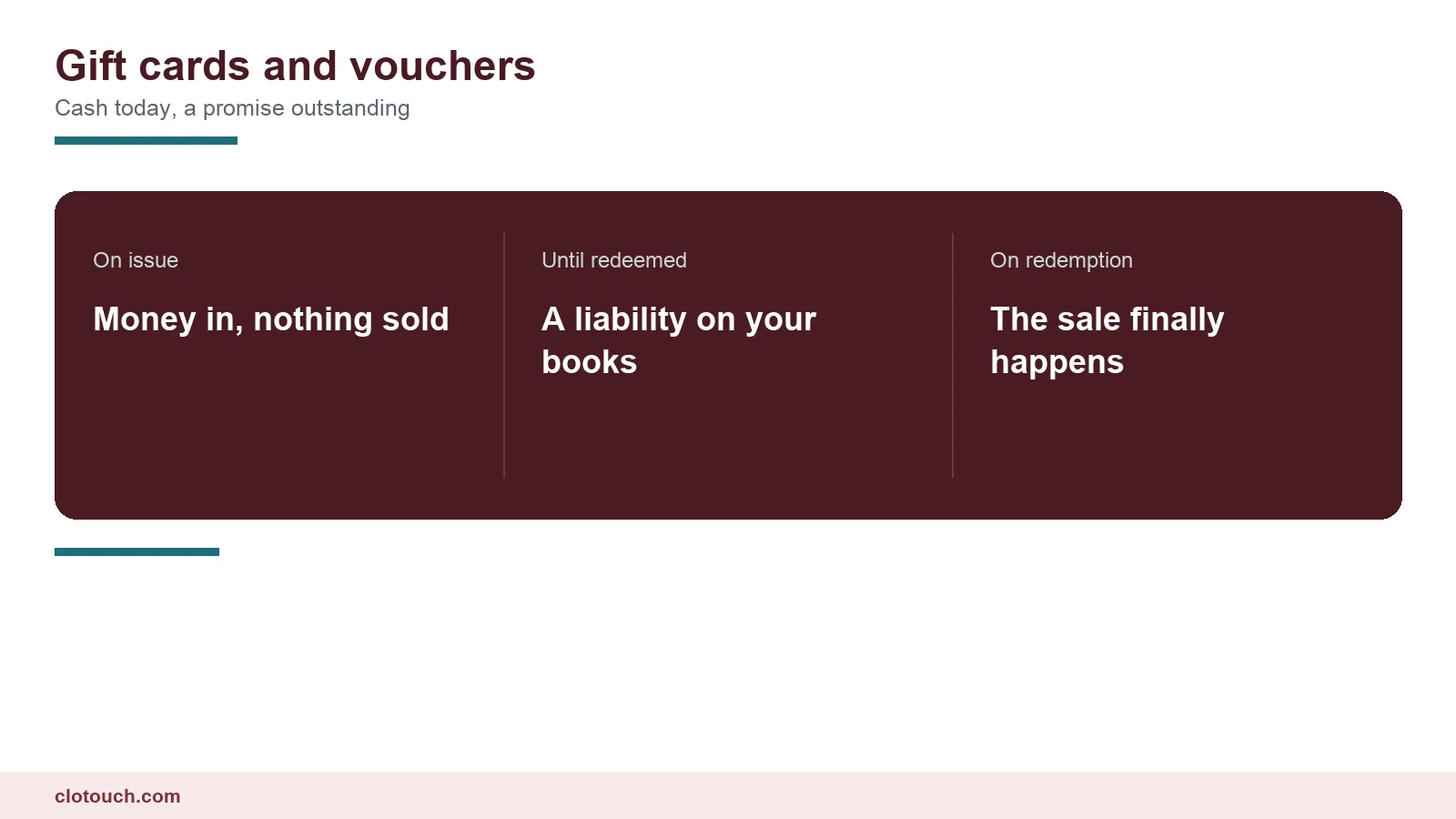
When a gift card is loaded, record the money received and a matching liability. The sale happens when somebody redeems it against goods.
This is not accounting pedantry. A shop that books issues as sales shows a strong December and a weak January, having actually had one steady season.
The same logic covers advances on orders, which most shops already understand intuitively. A gift card is just an advance against goods not yet chosen.
Five instruments, often confused
Shops use one word for several different things, and the differences matter at the counter.
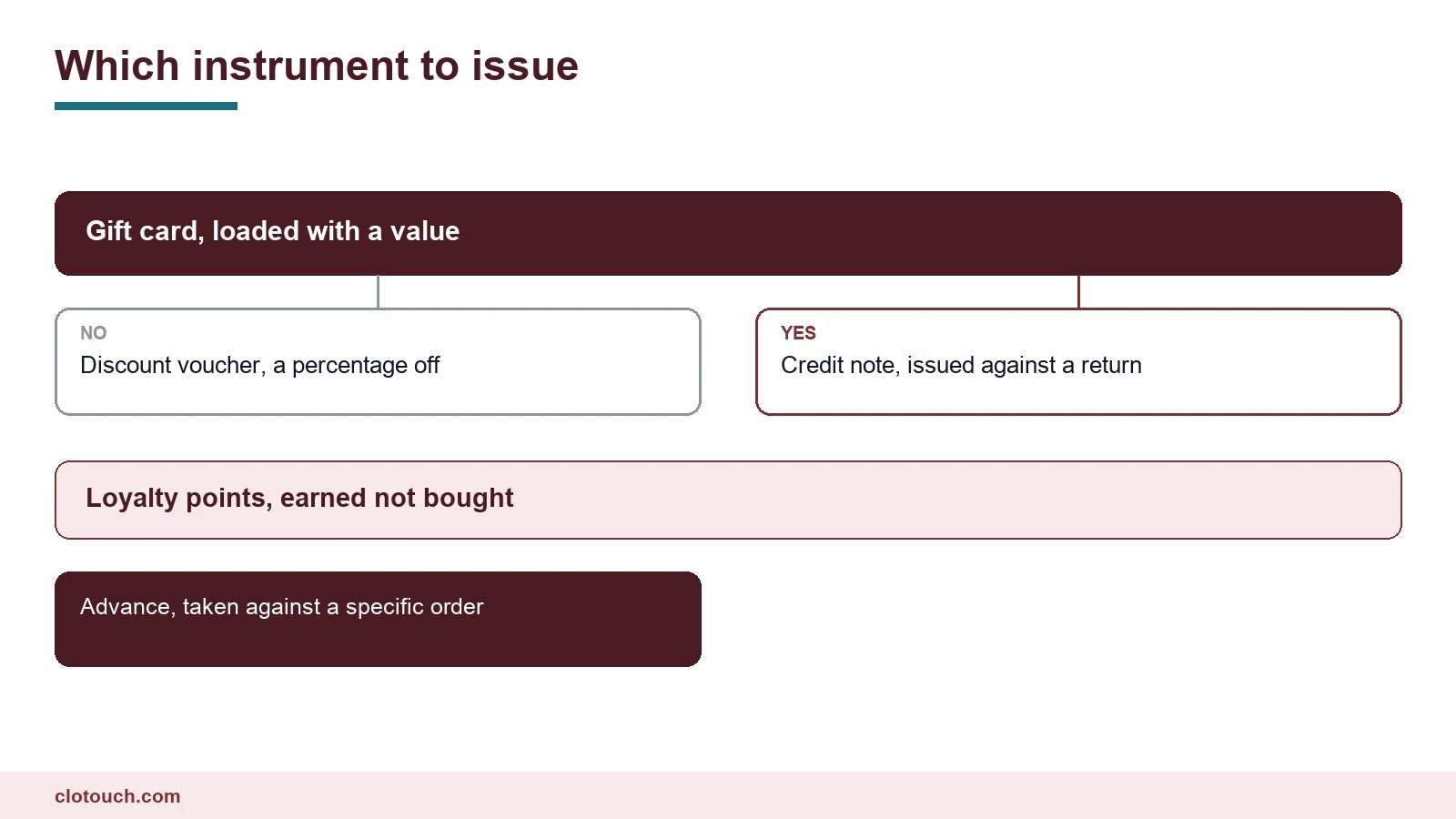
A gift card carries value the customer paid for. A discount voucher carries no value and costs you margin when used. A credit note arises from a return. Loyalty points are earned rather than bought.
Treating all four as one item in the system means you can never tell how much of your revenue is actually discounting, and the margin report becomes meaningless.
What a gift card must carry
The physical card is irrelevant. What matters is the record behind it, and five fields make it safe to accept.
- A unique number, never reissued even after full redemption
- The value loaded and the balance remaining, kept separately
- The issue date and the outlet that issued it
- The expiry, if any, stated on the card and in the system
- A status that can be blocked if the card is reported lost
Partial redemption is the field shops forget. A customer spending eleven hundred rupees from a two-thousand card expects to keep the rest, and a system that only handles full redemption will force staff to improvise.
Gift cards and vouchers at the redemption counter
Redemption is a tender, not a discount. The goods are sold at full price and the card pays for them, exactly like cash or UPI.
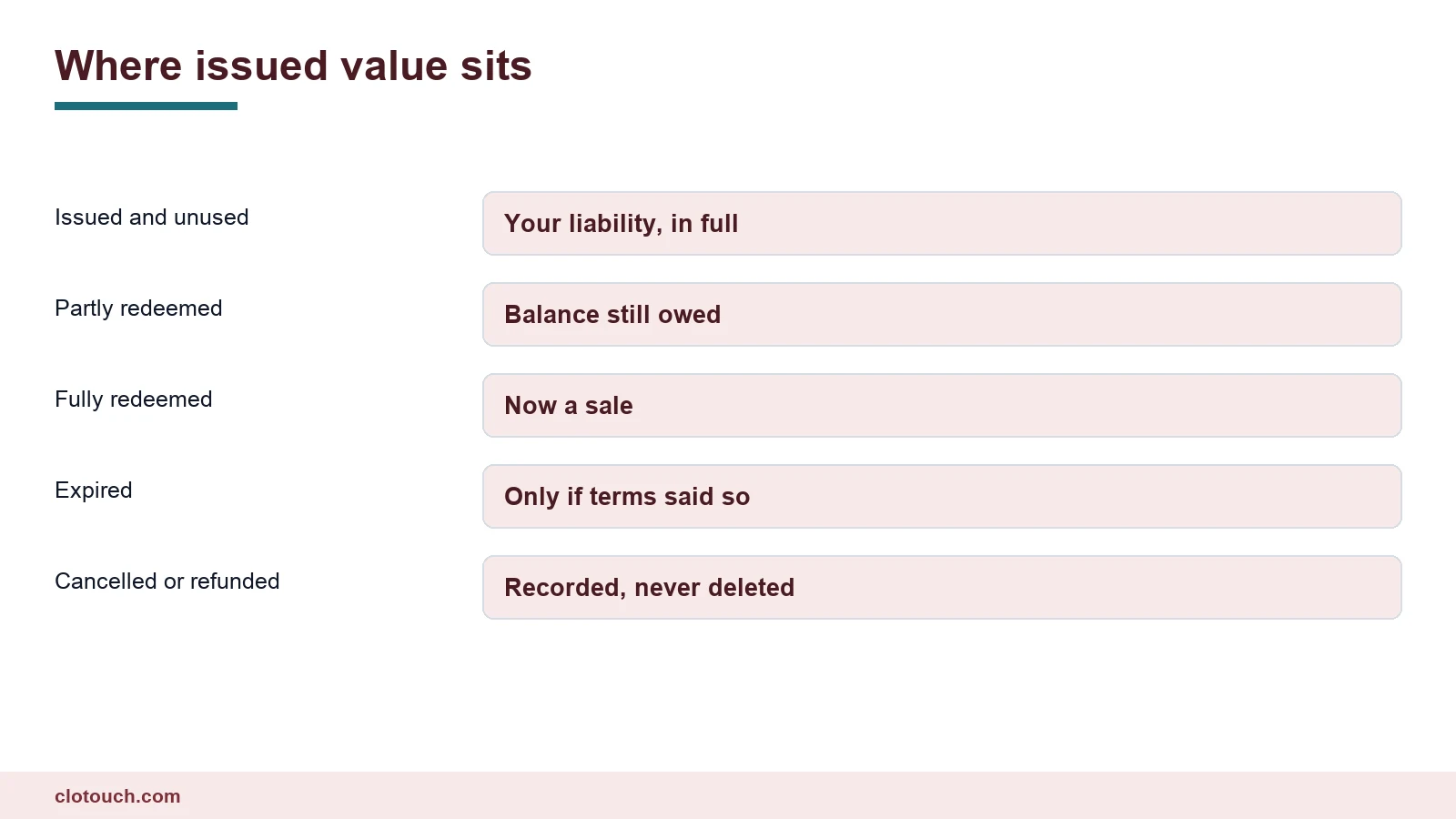
Where a counter records redemption as a discount, two things break. The sale value drops, so the margin report is wrong. And the liability stays open, so the shop owes the money twice over.
| At the counter | Correct treatment | Common mistake |
|---|---|---|
| Card covers the whole bill | Tender type gift card | Billed as a discount |
| Card covers part | Split tender, balance in cash | Cash taken, card not reduced |
| Card value exceeds the bill | Balance stays on the card | Change given in cash |
| Discount voucher used | Discount line, with reason | Treated as a tender |
| Expired card presented | Follow the stated terms | Decided person by person |
The third row is worth a rule of its own. Giving cash change against a gift card turns an instrument into a cash withdrawal, and it is how most voucher losses actually happen.
Expiry, and saying so in advance
If a card expires, that must be printed on the card and recorded in the system when it is issued. Deciding afterwards is a dispute you will lose.
Many shops choose not to expire gift cards at all, because the goodwill is worth more than the small balances. That is a reasonable choice, but it has to be a choice.
Either way, run an ageing of unredeemed value. The back office should show what is outstanding, by month issued, so the liability never becomes a surprise.
Across several outlets
A card sold at one branch and redeemed at another is the normal case, and it needs the balance held centrally rather than in each shop’s own records.
It also needs an internal settlement, because the outlet that gave up the goods is not the one that took the money. Many groups never set this up and the branch managers argue about it for years.
Where outlets run as separate books, agree the rule once and let store management apply it automatically.
Before issuing the first card
- Decide the expiry policy and print it on the card
- Make redemption a tender type, never a discount
- Forbid cash change against a card, in writing
- Hold balances centrally if you have more than one outlet
- Run an ageing of unredeemed value every month
Gift cards and vouchers are one of the few things in retail that bring cash forward. That is worth having, provided the shop remembers it is holding somebody else’s money until the goods go out of the door.
Frequently asked questions
Is issuing a gift card a sale?
No. Loading a card takes money in against goods not yet chosen, so it creates a liability. The sale happens on redemption. Shops that book issues as sales show a strong December and a weak January after one steady season.
Should redemption be recorded as a discount?
Never. Redemption is a tender, like cash or UPI, and the goods are sold at full price. Recording it as a discount understates the sale value, wrecks the margin report, and leaves the liability open so the shop effectively owes the money twice.
What happens when a card is worth more than the bill?
The balance stays on the card. Giving cash change turns the instrument into a cash withdrawal and is how most voucher losses actually happen. Keep the loaded value and the remaining balance as separate fields so partial redemption works.
Do gift cards need an expiry?
Only if you say so when issuing. Expiry has to be printed on the card and recorded in the system at issue, because deciding afterwards is a dispute you will lose. Many shops choose no expiry, which is fine as a deliberate choice.
How do gift cards work across several outlets?
The balance must be held centrally, since a card sold at one branch is usually redeemed at another. You also need an internal settlement rule, because the outlet that gave up the goods is not the one that took the money.
Sources, method and author
Written as an issuing and redemption procedure for a shop rather than an accounting treatment. The central point, that issue creates a liability and redemption creates the sale, is standard practice and is where most counter errors begin. The five instruments are separated because shops commonly use one word for all of them. Expiry and multi-outlet settlement are policy choices, and the article says so rather than prescribing one.
- Investopedia on deferred revenue — why an issued card is not yet income
- CBIC GST — treatment of vouchers under the GST law
- Reserve Bank of India — prepaid instrument rules, which apply beyond simple shop vouchers
Clotouch is a point of sale product built by Clonet Technologies Pvt Ltd. The procedure works in any system that supports a voucher tender type and a central balance, including ours. It is not tax, accounting or legal advice.
Author. Aman Raj. Published 26 October 2026 for Clonet Technologies Pvt Ltd, Bengaluru.