The debit note: what a shop sends back up the chain when the goods were wrong
Stock arrives short. A carton is wet. The rate on the bill is four rupees higher than the one agreed on the phone. Every shop deals with this weekly, and most deal with it by calling the supplier and adjusting something on the next payment. A billing system gives you a cleaner instrument for it.
That instrument is the debit note. It is simple, it is often misunderstood, and getting it right is what keeps a supplier ledger from becoming an argument.
On this page
What a debit note actually is
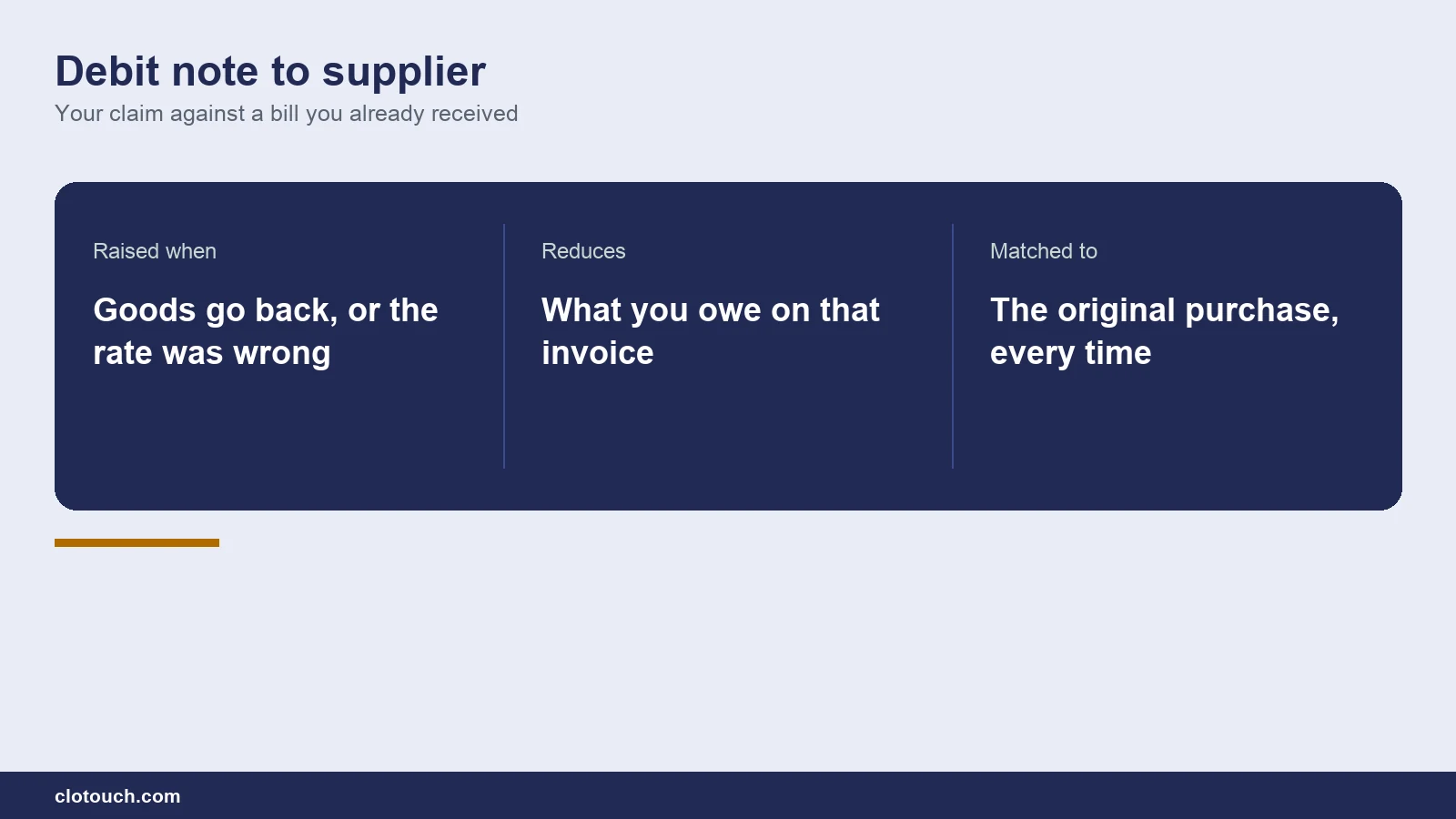
A debit note is a document you raise saying you owe the supplier less than their invoice claims. The word debit refers to their account in your books, which you are reducing.
It does not move money. It records a claim. Payment follows later, net of whatever the two sides agree.
Most shops raise one without calling it that. A note scribbled on the delivery challan, a figure deducted from the cheque, a message on WhatsApp. All of these are debit notes without a number.
When a debit note to supplier is the right document
There are five ordinary situations, and they cover almost everything a shop will meet.
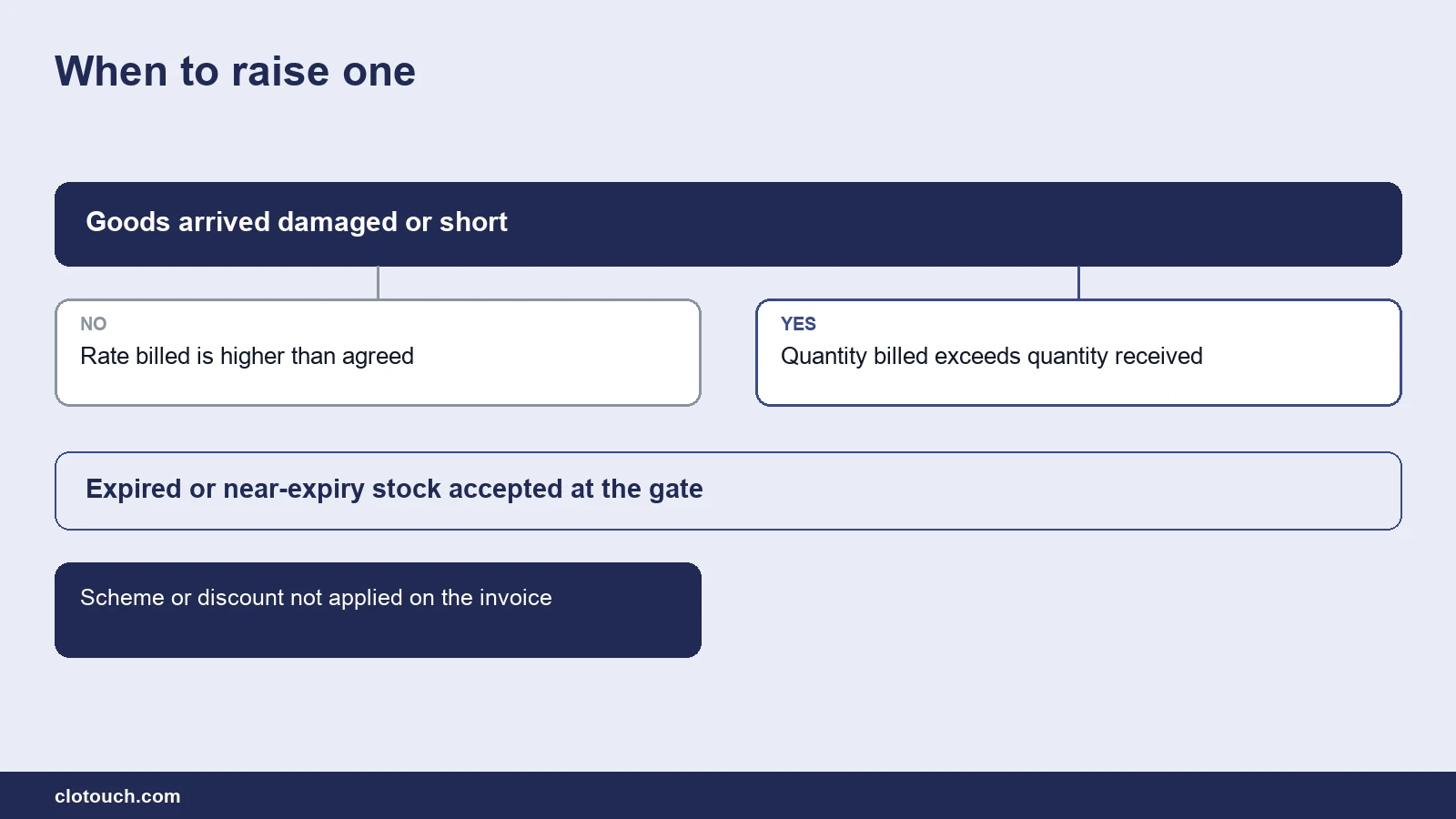
Notice what is missing from that list. Goods that sold badly are not a reason. Stock you over-ordered is not a reason. Those are negotiations, and dressing them up as a debit note damages the document’s credibility for the cases that matter.
Debit note and credit note are not the same thing
The two get used interchangeably in conversation and they are opposites. The buyer raises a debit note. The supplier issues a credit note.
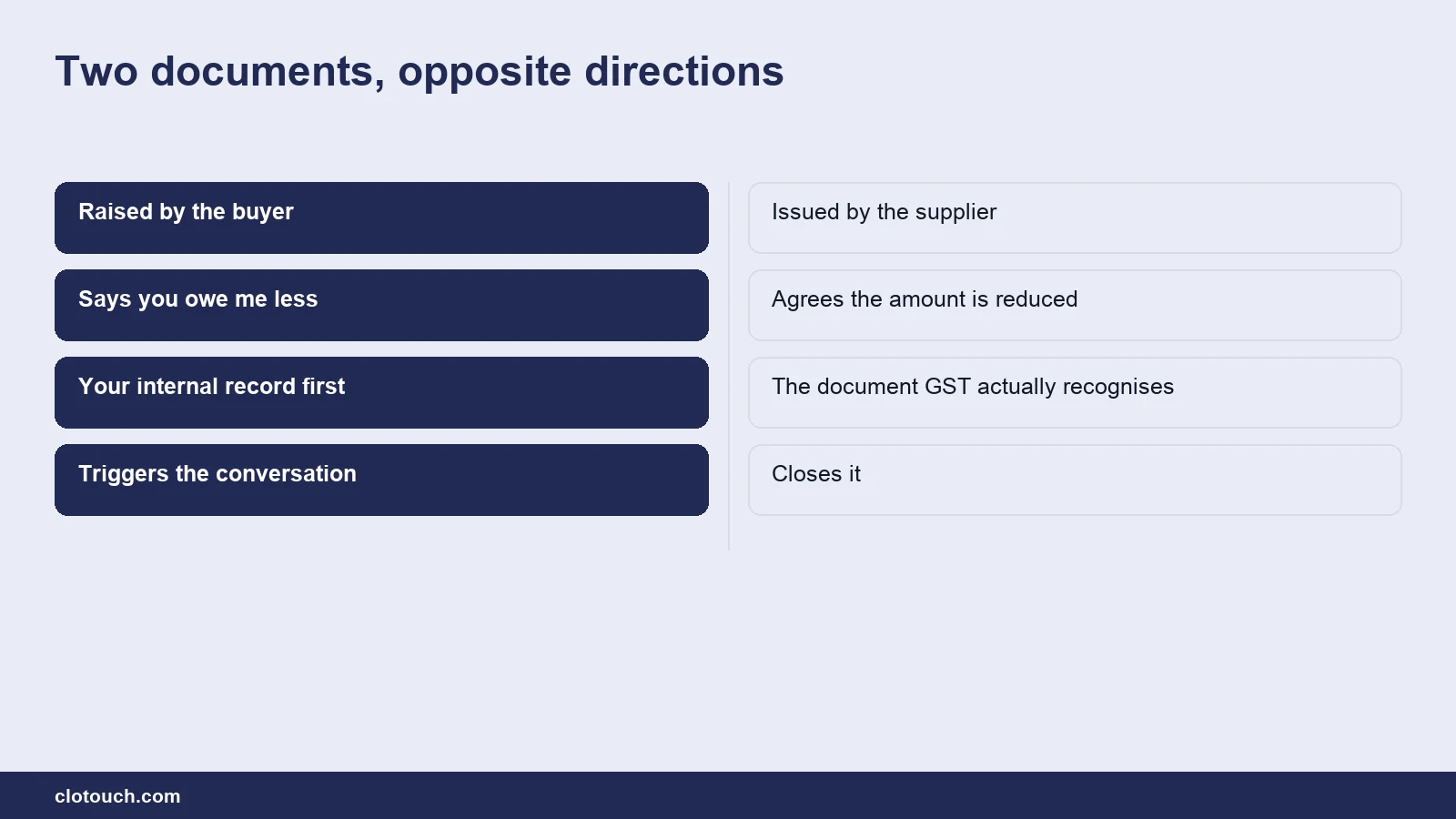
This matters under GST. The law recognises the credit note issued by the registered supplier as the document that adjusts the tax. Your debit note starts the process, but the supplier’s credit note is what closes it.
So a shop that raises debit notes and never chases the matching credit notes builds a ledger that disagrees with the supplier’s. The tax position behind it cannot be defended either.
What the document must carry
A debit note that cannot be matched to an invoice is a complaint, not a document. Five fields make it traceable.
- Your own serial number, unbroken across the year
- The supplier’s invoice number and date it refers to
- The item, with quantity and rate as billed
- The reason, in words, not a code only you understand
- The tax amount being claimed back, split by head
The reason field is the one people skip. Six months later, when a supplier disputes three notes at once, the reason is the only thing that settles it.
The returns gate at the back door
Most debit notes start at goods receipt. Somebody opens the carton, finds eight units instead of ten, and has to decide what happens next.
| What is found | Action at the gate | Document raised |
|---|---|---|
| Short quantity | Receive what arrived, note the gap | Debit note for the shortfall |
| Damaged goods | Receive separately, photograph | Debit note with photos attached |
| Wrong item sent | Hold, do not shelve | Return note, then debit note |
| Rate higher than agreed | Receive the goods, flag the bill | Debit note for the difference only |
| Expiry too close | Refuse at the gate if possible | No receipt, no debit note needed |
The last row is the cheapest outcome and the one shops forget. Goods refused at the gate never enter your stock, never enter your payables and never need a document at all.
Keep the stock in step
A debit note for returned goods has to reduce stock as well as the payable. Where the two are separate systems, the money is adjusted and the stock is not.
The result is a shop that believes it holds ten units of something it sent back a month ago. Linking the note to the goods movement in your stock records is what prevents it.
A rate-difference note is the exception. Nothing physically moves, so only the value changes, and treating it like a return will corrupt the quantity.
Chasing the credit note
Raising the note is the easy half. The harder half is making sure the supplier accepts it and issues their credit note against it.
- Send the note the same week, not with the next payment
- Attach evidence for damage, which usually means photographs
- Record the supplier’s acceptance, or their refusal with a reason
- Track open notes by age, the way you would track receivables
- Reconcile against the credit notes that actually arrive, monthly
An ageing report of unaccepted debit notes is a report very few shops run and almost all of them need. It usually shows that a small number of suppliers absorb most of the argument.
The habit worth building
Raise the note at the gate, on the day, with the reason written out. Not at month end from memory, and not as a deduction from a cheque that the supplier will query three weeks later.
A debit note to supplier raised properly is a one-minute job that protects a figure for a year. Run the ageing from the back office once a month and the supplier ledger stops being a matter of opinion.
Frequently asked questions
What is a debit note to a supplier?
A document the buyer raises to say they owe the supplier less than the invoice claims, usually because goods were short, damaged or billed at the wrong rate. It records a claim rather than moving money, and payment follows net of what both sides agree.
How is a debit note different from a credit note?
They run in opposite directions. The buyer raises the debit note; the supplier issues the credit note. Under GST it is the registered supplier’s credit note that adjusts the tax, so a debit note starts the process and the credit note closes it.
What must a debit note contain?
Your own unbroken serial number. The supplier’s invoice number and date. The item, with quantity and rate as billed. The reason written in words. And the tax being claimed back, split by head. The reason field is what settles a dispute months later.
Does a debit note reduce stock?
It should, when goods physically go back. If the money is adjusted but the stock is not, the shop keeps believing it holds units it returned. A rate-difference note is different, since nothing moves and only the value changes.
What should I do if the supplier ignores the note?
Track open notes by age the way you track receivables. Send each one the same week with evidence attached, record acceptance or refusal, and reconcile monthly against the credit notes that actually arrive. An ageing report usually shows a few suppliers causing most of it.
Sources, method and author
Written as a back-door and payables procedure rather than an accounting lecture. The distinction between a buyer’s debit note and a supplier’s credit note follows GST practice, where the registered supplier’s credit note is the document that adjusts the tax. The five trigger situations and the receipt-gate actions are the ones that account for most purchase-return activity in a shop. It is not tax advice, and thresholds or formats should be confirmed on the CBIC site.
- CBIC GST — credit and debit note provisions under the GST law
- Investopedia on debit notes — the general accounting meaning
- Department of Consumer Affairs — legal metrology, which governs short weight and quantity
Clotouch is a point of sale product built by Clonet Technologies Pvt Ltd. The procedure works in any system that links purchase returns to both stock and the supplier ledger, including ours. It is not tax or legal advice.
Author. Aman Raj. Published 24 October 2026 for Clonet Technologies Pvt Ltd, Bengaluru.