Furniture store billing software: display pieces, made-to-order and a delivery truck
A furniture showroom sells very little that leaves with the customer. Most sales are orders: a sofa in a chosen fabric, a bed from the godown, a wardrobe made to measure. Furniture store billing software has to manage the gap between the order and the delivery, which is where a general billing system usually goes quiet.
That gap is weeks long, money sits in it, and most customer complaints are born there.
On this page
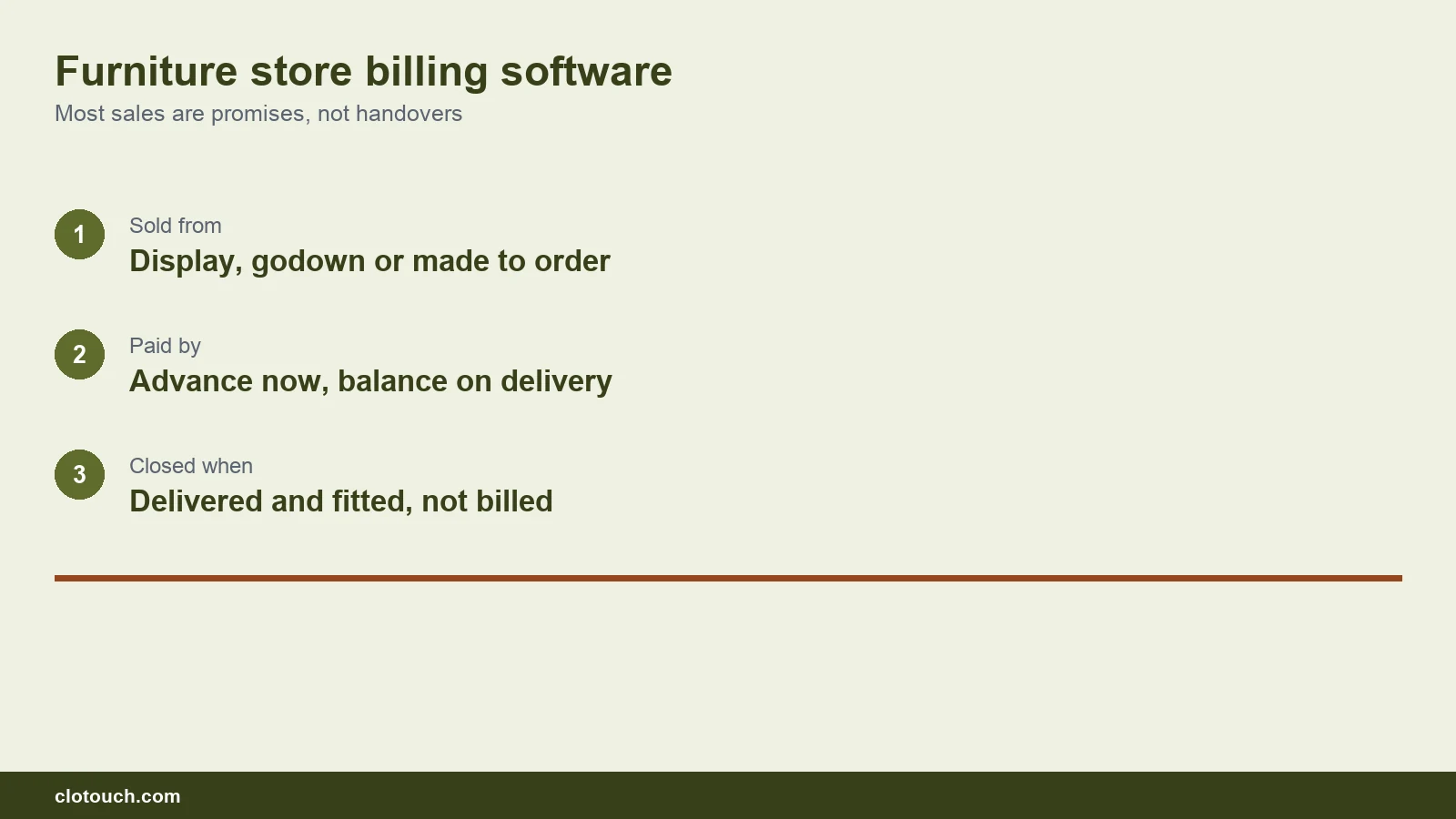
Three kinds of stock in one showroom
Display pieces are stock, but they are also the showroom. Selling one means a gap on the floor and usually a discount for a marked piece.
Godown stock is new, packed and ready to deliver. Made-to-order pieces do not exist yet. The order creates them, and their cost is only known once the maker bills you.
The system needs to know which of the three a sale comes from. Selling a display piece as though it were godown stock leaves a phantom unit in the godown count.
Variants multiply quickly
One sofa model in four fabrics, three colours and two sizes is twenty-four variants. Most of them will never be in stock. They exist only as things a customer can order.
Keep the model as the item and record fabric, colour and size on the order line. Creating twenty-four stock items for one sofa clutters the catalogue with lines that never hold stock.
The exception is godown stock. Units physically held do need their variant recorded, or a customer is promised a grey three-seater that turns out to be blue.
Advances are not sales
A customer pays twenty or thirty per cent to book an order. That money is held against a promise. Until the furniture is delivered, the sale has not happened.
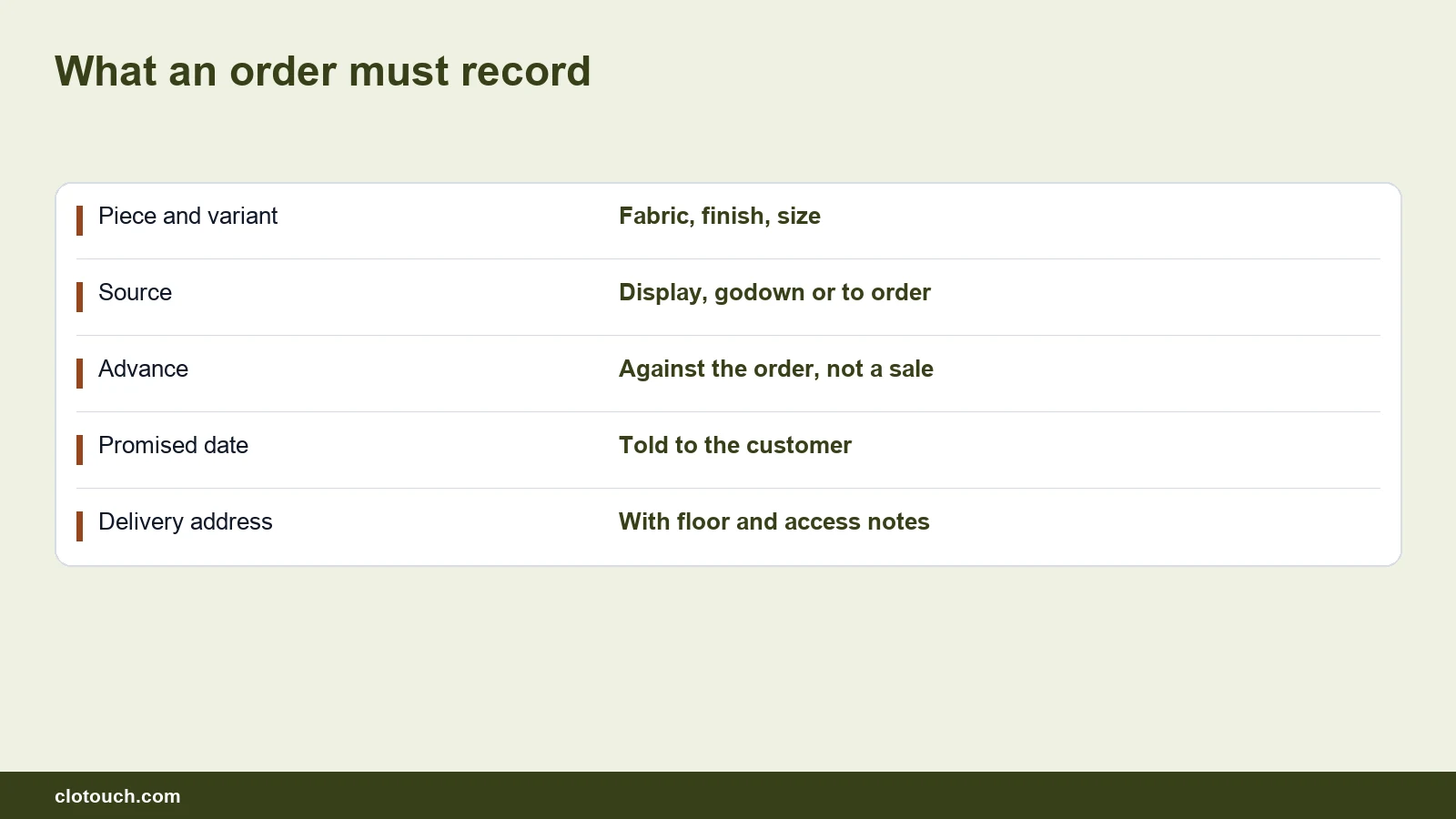
Booking advances as sales makes a good month look spectacular and the following month look terrible, when the real business was steady. Record advances against the order and recognise the sale on delivery.
Cancelled orders need a rule agreed at booking. Whether the advance is refunded, partly kept or held as credit should be written on the order, not decided in an argument later. Made-to-order pieces deserve the firmest rule, because the maker has already been paid to start.
Furniture store billing software and the delivery
Delivery is the moment the customer actually receives what they paid for. It is also the moment most complaints begin: scratches, wrong fabric, a piece that does not fit through the door.
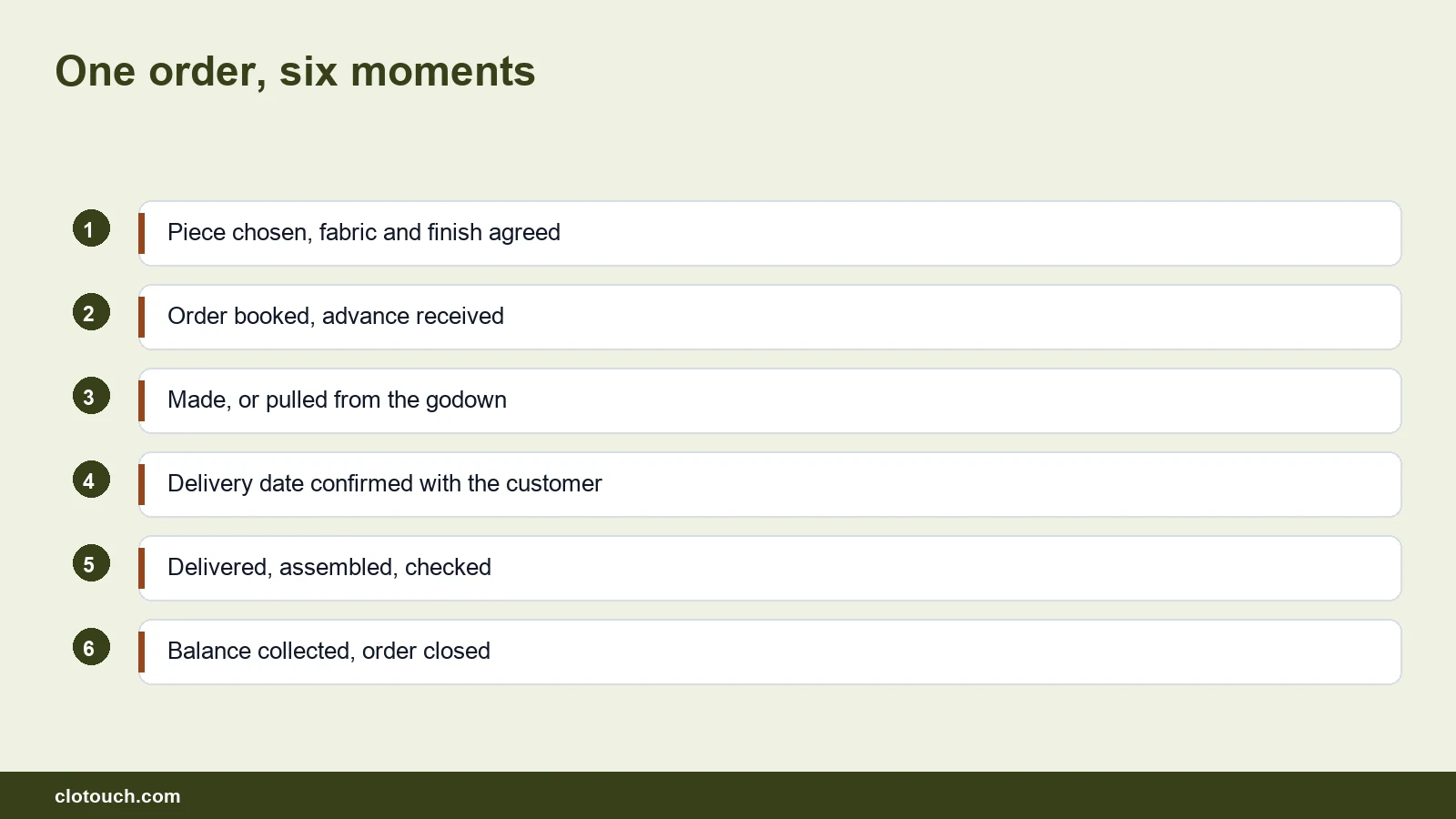
| Stage | What the system records | What it prevents |
|---|---|---|
| Order booked | Variant, advance, promised date | Disputes about what was agreed |
| Ready to deliver | Piece checked, date confirmed | Delivering damaged goods |
| Out for delivery | Vehicle, crew, time window | Customers waiting all day |
| Delivered | Signed handover, condition noted | Damage blamed on the shop later |
| Balance collected | Tender recorded, order closed | Goods left with money still owed |
The signed handover is the record that protects you. A customer who signs that a piece arrived in good condition cannot easily claim a scratch a week later. A photograph taken by the crew at handover makes it stronger still, and costs nothing.
The pending orders report
The single most useful screen in a furniture business is a list of open orders by promised date. It shows what is late, what is ready but undelivered, and how much money is held in advances.
- Orders past their promised date, oldest first
- Pieces ready in the godown but not yet delivered
- Advances held against orders not yet started
- Balances due on delivery this week
- Cancelled orders with refunds still pending
A shop that reads this list every morning calls customers before they call the shop. That one habit removes most of the anger in this trade. It also shows which makers are consistently late, which is worth knowing before the next big order.
Selling the display piece
Display pieces sell at a discount because they have been sat on, touched and moved. Record that discount as its own reason, so it does not disappear into general discounting.
Replace the floor model promptly, or the showroom slowly empties of the pieces that sell best. Your stock reports can flag a display slot left empty for more than a week.
What to test before choosing
- Book an order with an advance and check today’s sales do not include it
- Record fabric, colour and size on an order without creating new items
- Sell a display piece and see the godown count stay unchanged
- Mark an order delivered with a condition note
- Produce a list of open orders sorted by promised date
Furniture store billing software that handles these five is built around orders, which is how the trade actually works. The back office then shows what is owed, what is late and what is held, instead of a sales figure that swings with every big booking.
Frequently asked questions
Why can’t a normal shop till handle furniture?
Because most furniture sales are orders, not handovers. The piece is chosen today, made or pulled from the godown later, and delivered weeks afterwards. A till built for instant sales has nowhere to hold the order, the advance or the promised date.
How should advances be recorded?
Against the order, not as a sale. The sale is recognised on delivery. Booking advances as revenue makes heavy booking months look spectacular and the following months look weak, even when the business is steady.
Should every fabric and colour be a separate item?
Usually not. Keep the model as the item and record fabric, colour and size on the order line. The exception is stock you physically hold in the godown, where the variant must be recorded so the right piece is promised.
What protects a shop against damage claims after delivery?
A signed handover noting the piece’s condition at delivery. Without it, a scratch reported a week later becomes your word against the customer’s. With it, the conversation is short.
What is the most useful report for a furniture shop?
A pending orders list sorted by promised date, showing late orders, pieces ready but undelivered, advances held and balances due. Reading it every morning lets the shop call customers before customers call the shop.
Sources, method and author
Built around the order-to-delivery cycle that defines furniture retail, rather than a product feature list. The treatment of advances follows ordinary practice for prepaid orders. The display, godown and made-to-order split reflects how showrooms actually hold stock. No delivery charges, advance percentages or cancellation terms are prescribed, since they are each shop’s own policy.
- CBIC GST — time of supply rules where advances are taken
- National Consumer Helpline — delivery, refund and defect complaints
- Investopedia on deferred revenue — why an advance is not yet income
Clotouch is a point of sale product built by Clonet Technologies Pvt Ltd. This guide describes what to test in any system for a furniture store, including ours. It is not tax or legal advice.
Author. Aman Raj. Published 2 November 2026 for Clonet Technologies Pvt Ltd, Bengaluru.