
Stock audit without shutting the shop: how cycle counting replaces the annual nightmare
The traditional stock audit is a closed shutter, a long evening, tired staff and a number nobody fully trusts by midnight. It happens once a year, it finds errors that are eleven months old, and it tells you nothing about which of them you could still have fixed. A stock system makes a better method possible.
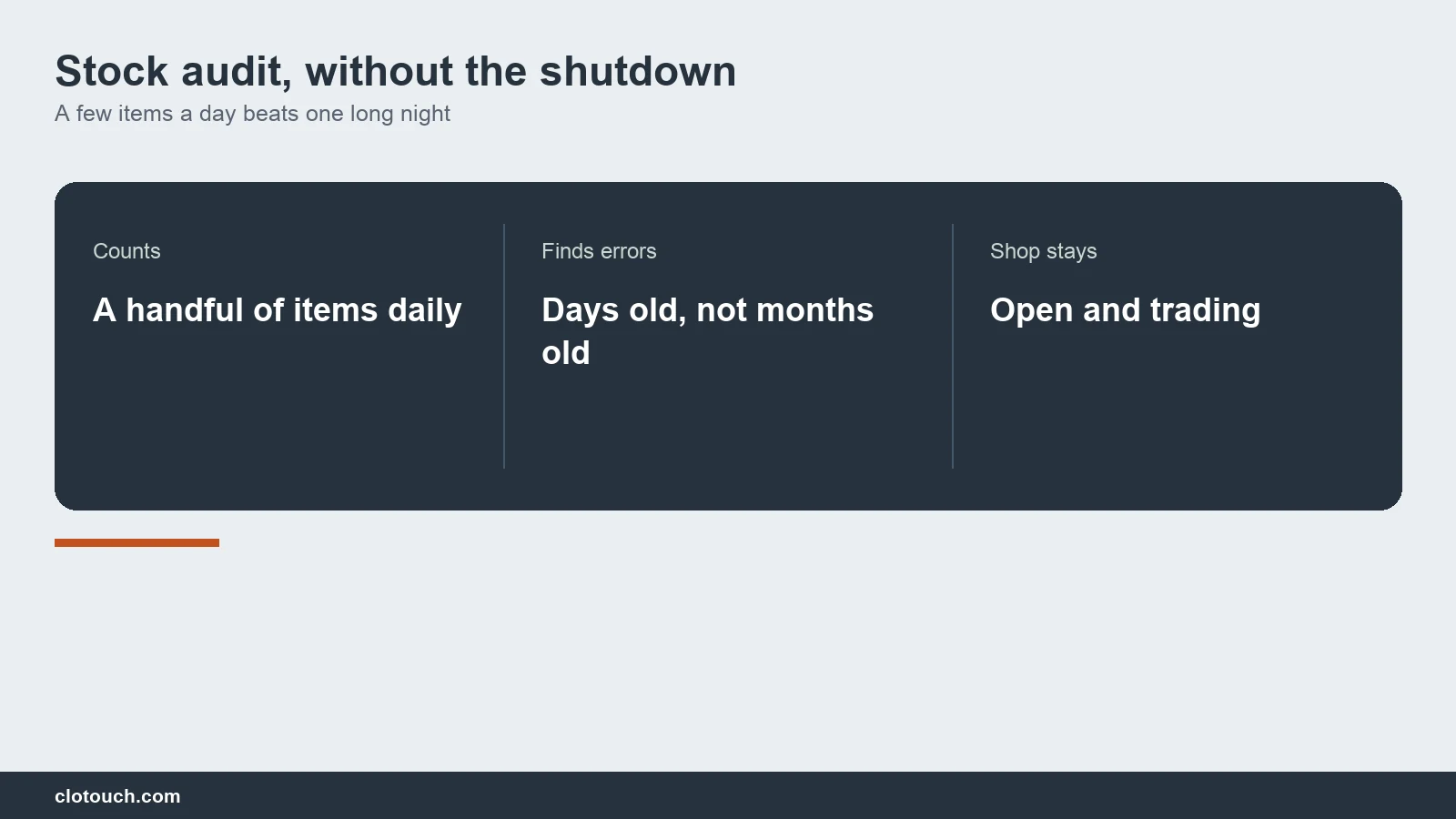
That method is cycle counting. Instead of counting everything once, you count a few items every day, on a rota, while the shop trades normally.
On this page
Why the annual stock audit fails
It is not the counting that fails. It is the timing. An error found in March that happened in April of the previous year cannot be investigated. The delivery note is gone, the staff member has moved on, and the camera footage was overwritten.
So the adjustment gets posted, the difference is called shrinkage, and nothing changes. The next year produces a similar number for similar reasons.
Cycle counting changes only one variable. It shortens the gap between an error happening and somebody noticing it. Everything else about the count is the same.
Choosing what to count, and how often
Not every item deserves equal attention. Rank your items by annual sales value and split them into three bands. The small group at the top usually accounts for most of your turnover, and it is where a counting error costs real money.
| Band | Roughly | Count it |
|---|---|---|
| A, highest value movement | Top fifth of items | Monthly |
| B, moderate movement | Next third | Quarterly |
| C, long tail | The rest | Twice a year |
| Anything with a history of differences | Any band | Monthly, until it settles |
| High theft risk small items | Any band | Monthly |
That rota produces a daily list of a manageable size. A shop with three thousand items might count twenty to forty lines a day. That is twenty minutes for one person before the rush, and it fits beside the normal counter routine.
Running a session properly
Pick the list the night before, so nobody chooses what to count while standing in front of the shelf. Freeze movement on those items during the count, or at least record any sale that happens mid-count.
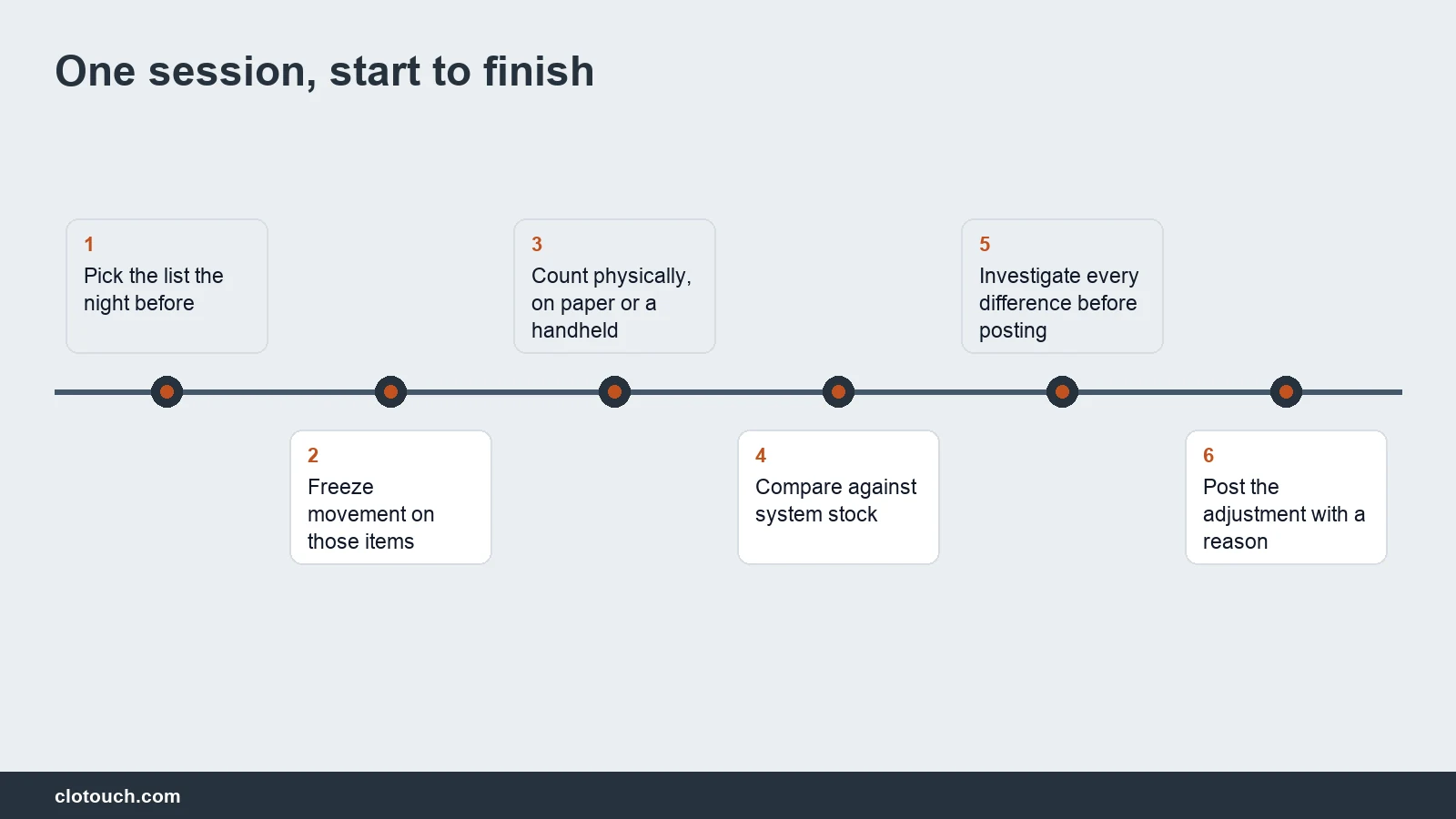
Count blind if you can. That means the counter does not see the system quantity before counting. People unconsciously count towards a number they have already seen, and a blind count is the only way to know that did not happen.
Then compare, and investigate before you adjust. Posting an adjustment without a reason converts a question into a fact, and the question is the valuable part.
Most differences are not theft
Owners jump to theft because it is the explanation that feels like an answer. In practice, most differences come from paperwork.
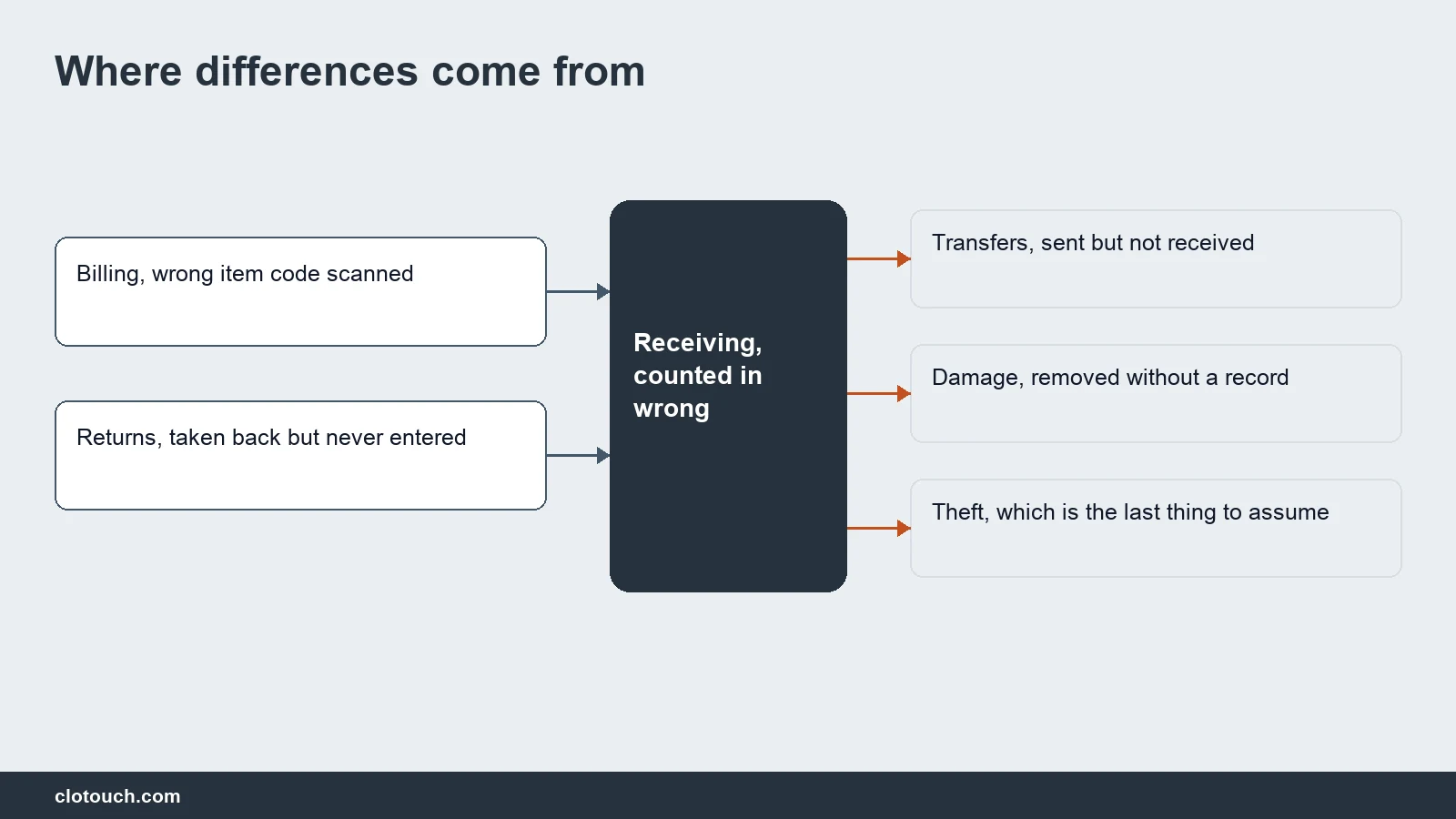
A case counted as twelve that held ten. A similar looking item scanned instead of the right one. A customer return accepted at the counter and never entered. A transfer dispatched from one branch and never received at the other. Each of these produces a clean, innocent difference.
The useful habit is to check in that order. Receiving, billing, returns, transfers, damage. Theft is what remains when the other five are ruled out, and by then you usually also know which shift and which item.
Adjustments need reasons and permissions
A stock adjustment is the single most sensitive transaction in a retail system. It can make a difference disappear without a trace. Treat it accordingly.
- Only a named role can post an adjustment, never every cashier
- Every adjustment carries a reason code from a short fixed list
- Damage, expiry and theft are separate reasons, not one bucket
- The system keeps who posted it, when, and the before and after quantity
- Large adjustments need a second approval before they take effect
Reason codes do more work than they look. Group a month of adjustments by reason and the pattern appears. It will point at the receiving bay, the counter or the shelf. The back office is where that grouping becomes readable.
Measuring whether it is working
Count accuracy is the share of counted lines that matched exactly. Not within a tolerance, exactly. A shop starting cycle counting often finds accuracy in the seventies, and most of the recovery happens in the first two months because the obvious process faults get fixed.
Track two numbers only. The share of lines that matched, and the value of adjustments posted. If accuracy rises and adjustment value falls, the stock audit routine is doing its job.
Starting next week
- Rank items by annual sales value and mark the top fifth
- Write a rota: A monthly, B quarterly, C twice yearly
- Pick a fixed time of day and a person responsible
- Count blind, investigate differences, then post with a reason
- Review accuracy and adjustment value at the end of each month
You do not need new hardware to begin. A printed list and a pen work for the first month, and the discipline matters more than the device. A stock audit that happens every day in small pieces beats a perfect one that happens once a year.
Frequently asked questions
What is cycle counting and how is it different from a full stock audit?
Cycle counting checks a small set of items every day on a rota while the shop trades, instead of counting everything once a year behind closed shutters. The counting work is the same. What changes is the gap between an error happening and somebody noticing it.
How do I decide which items to count more often?
Rank items by annual sales value. Count the top fifth monthly, the middle band quarterly and the long tail twice a year. Add anything with a history of differences or a high theft risk to the monthly list until it settles down.
What does counting blind mean and why does it matter?
It means the person counting does not see the system quantity first. People unconsciously count towards a number they have already been shown, so a blind count is the only reliable way to know the physical figure was reached independently.
Most of my differences turn out to be theft, is that normal?
It is usually not the first explanation. Check receiving, billing, returns, transfers and unrecorded damage in that order. Cases counted in wrong, similar items scanned by mistake and returns accepted but never entered produce the majority of innocent differences.
Who should be allowed to post a stock adjustment?
A named role, not every cashier. Each adjustment should carry a reason code from a short fixed list, record who posted it and when, and keep the before and after quantity. Large adjustments are worth putting behind a second approval.
Sources, method and author
A practical procedure assembled from standard inventory control practice and adapted to a shop that cannot afford to close. The ABC ranking, blind counting and reason coded adjustments are long established techniques. The accuracy figures mentioned are typical starting points reported by shops beginning cycle counting, not a benchmark, and your own first month will set your baseline.
- Investopedia on ABC inventory classification — the ranking method behind the counting rota
- Investopedia on shrinkage — what the number actually covers, beyond theft
- Ministry of Micro, Small and Medium Enterprises — working capital context for small retailers
Clotouch is a point of sale product built by Clonet Technologies Pvt Ltd. The routine described works in any system that records stock movements with reasons, including ours. Nothing here is audit or accounting advice.
Author. Aman Raj. Published 7 October 2026 for Clonet Technologies Pvt Ltd, Bengaluru.