Choosing Your System 5 Key Features for the Best Restaurant POS
- restaurant POS software
- restaurant POS software
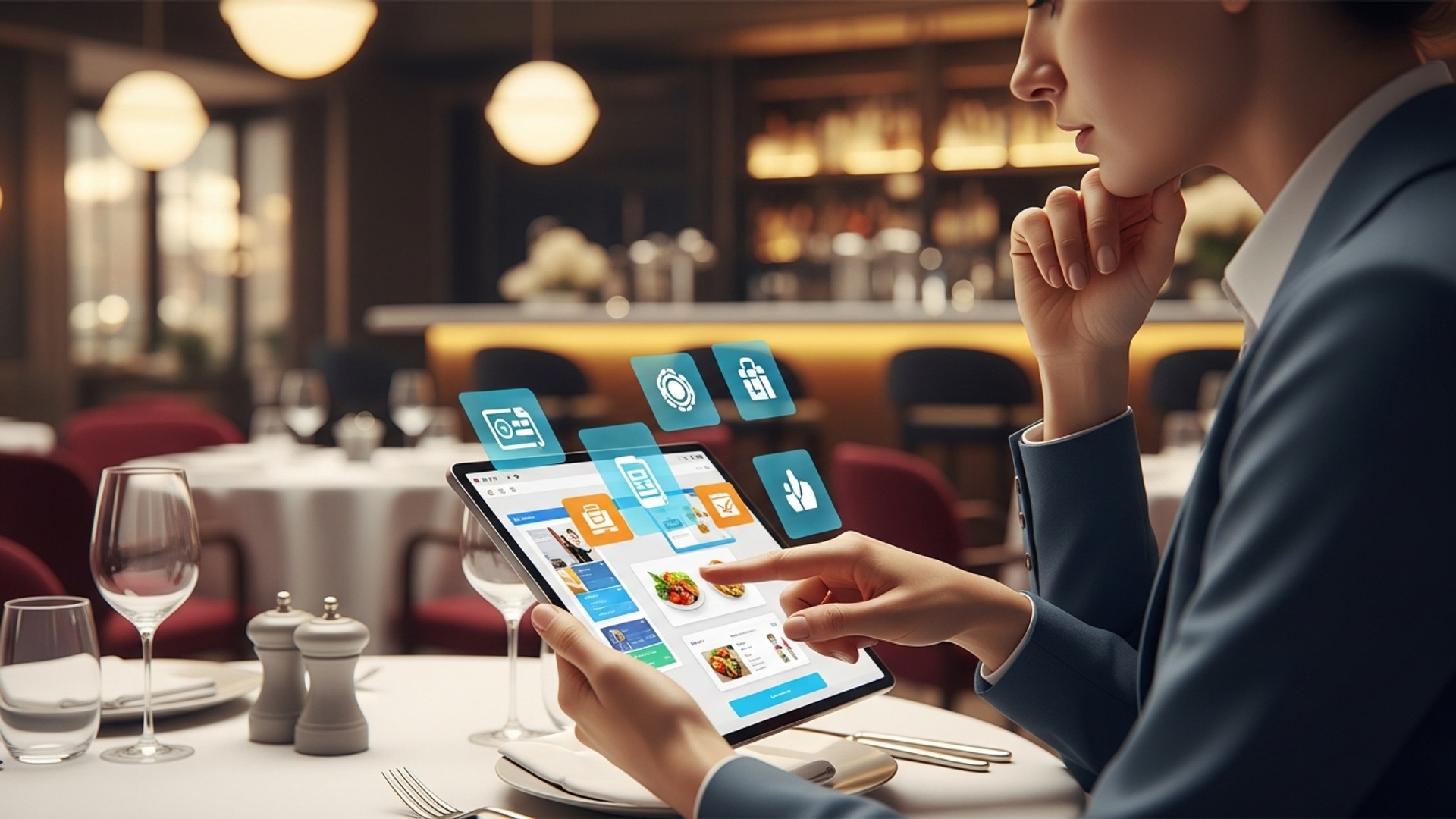
Seamless Order Management and Customization: The Heart of Your Operation
When evaluating Restaurant POS software, the ability to efficiently manage orders and customize menu items is arguably the most critical feature. It’s the engine that drives your front-of-house, dictating speed, accuracy. ultimately, customer satisfaction. A top-tier restaurant POS system should simplify the entire ordering process, from taking an order to sending it to the kitchen and ultimately, to the customer’s table or delivery driver.
Imagine a bustling Saturday night; your servers are juggling multiple tables. the kitchen is slammed. A robust POS system minimizes errors and streamlines communication. It allows for intuitive order entry, ensuring that every modification, dietary restriction, or special request is accurately captured and relayed. Without this, even the most skilled staff can struggle, leading to costly mistakes and unhappy diners.
Key Sub-Features to Look For:
- Intuitive Order Entry
- Menu Customization
- Table Management
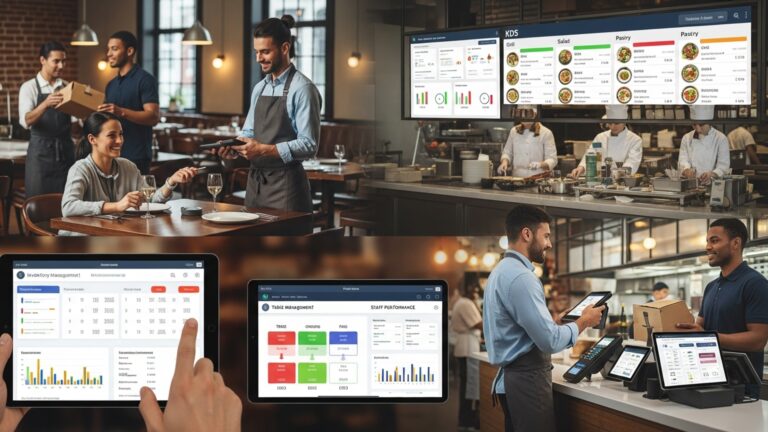
- Kitchen Display System (KDS) Integration
- Online Ordering Integration
Easy-to-navigate interface for quick order taking, even during peak hours.
Ability to easily add, edit. remove menu items, specials. modifiers (e. g. , “no onions,” “extra cheese”). This includes pricing adjustments and availability.
Visual floor plan management to track table status, split bills, transfer tables. manage reservations directly from the POS.
Seamless integration with KDS for real-time order routing to specific kitchen stations, reducing paper waste and improving kitchen efficiency.
Crucial for modern restaurants, allowing direct integration with your website or third-party delivery platforms.
Consider the case of “The Daily Grind,” a popular café. Before upgrading their Restaurant POS software, their servers used paper tickets, often leading to miscommunications with the barista station. After implementing a system with a KDS, order accuracy improved by 15%. average order fulfillment time dropped by two minutes, directly impacting customer throughput and revenue.
A simple code snippet for how a menu item might be structured in a modern POS system’s backend could look like this, illustrating the granular control over menu items:
{ "item_id": "M001", "name": "Classic Burger", "category": "Main Courses", "price": 12. 99, "description": "1/3 lb Angus beef patty, lettuce, tomato, onion, pickle." , "modifiers_groups": [ { "group_name": "Cook Temp", "options": ["Rare", "Medium Rare", "Medium", "Medium Well", "Well Done"], "type": "single_select" }, { "group_name": "Add-Ons", "options": [ {"name": "Bacon", "price": 2. 00}, {"name": "Cheddar Cheese", "price": 1. 50}, {"name": "Avocado", "price": 2. 50} ], "type": "multi_select" } ], "available": true, "tax_rate_id": "TX01"
}
When selecting your system, look for demonstrations of how quickly and easily a new server can learn the order entry process. The simpler it is, the less training time required. the fewer errors you’ll encounter.
Robust Payment Processing and Security
Beyond taking orders, your POS system is the gatekeeper of your revenue. Secure and flexible payment processing is non-negotiable in today’s digital economy. Customers expect a variety of payment options, from traditional credit cards to mobile payments. you, as a business owner, need to ensure these transactions are processed securely and efficiently.
Payment processing refers to the entire workflow of accepting payments, from swiping a card to funds landing in your bank account. A reliable system minimizes transaction fees, speeds up checkout times, and, most importantly, protects sensitive customer data from breaches. This is where compliance with industry standards like PCI DSS (Payment Card Industry Data Security Standard) becomes paramount.
Essential Payment & Security Features:
- Multiple Payment Options
- PCI DSS Compliance
- Offline Mode
- Tokenization and Encryption
- Integrated vs. Standalone Processors
Support for credit/debit cards (Visa, Mastercard, Amex, etc.) , NFC (Apple Pay, Google Pay), EMV chip cards, gift cards. even split payments.
Ensures your system adheres to strict security standards to protect cardholder data. Non-compliance can lead to hefty fines and reputational damage.
The ability to process payments even if your internet connection goes down, preventing lost sales during outages. Transactions are queued and processed once connectivity is restored.
Technologies that scramble and replace sensitive card data with unique, non-sensitive identifiers, making it useless to hackers even if intercepted.
interpret the difference. Integrated systems mean your POS and payment terminal are one, streamlining operations and reconciliation. Standalone terminals require manual entry, increasing error risk.
Many restaurant owners, like Sarah from “Pizzaville,” initially opted for cheaper, standalone payment terminals. While seemingly saving money upfront, the manual reconciliation at the end of each day became a nightmare, prone to human error. Switching to a fully integrated POS system significantly reduced her end-of-day closing time and virtually eliminated payment discrepancies.
Here’s a comparison of integrated vs. standalone payment processing:
| Feature | Integrated Payment Processing | Standalone Payment Terminal |
|---|---|---|
| Data Entry | Automatic transfer from POS to terminal | Manual entry required on terminal |
| Error Rate | Low (minimizes human error) | Higher (prone to manual entry mistakes) |
| Reconciliation | Automated, seamless | Manual, time-consuming |
| Security | Often enhanced with end-to-end encryption | Depends on terminal, less seamless security chain |
| Cost Efficiency | Potentially higher upfront, better long-term operational savings | Lower upfront, higher long-term operational costs |
Always scrutinize the payment processing fees and terms. Some POS providers act as both software and payment processors, which can simplify billing but might limit your negotiation power on rates. Others integrate with various third-party processors, offering more flexibility.
Comprehensive Inventory Management and Supply Chain Control
For any restaurant, controlling costs is as vital as generating revenue. Effective inventory management within your POS system is the unsung hero that helps you minimize waste, prevent theft. ensure you never run out of critical ingredients. It’s about knowing exactly what you have, what you need. when to order it.
A well-implemented inventory system goes beyond simply counting items. It helps you track ingredient usage down to the gram, identify popular dishes that consume specific ingredients. even predict future demand. This level of detail is crucial for maintaining profitability and making informed purchasing decisions.
Key Inventory Management Capabilities:
- Ingredient-Level Tracking
- Real-Time Stock Levels
- Vendor Management
- Automated Reordering
- Waste Tracking
- Cost of Goods Sold (COGS) Calculation
Break down menu items into their raw ingredients (e. g. , a burger uses X oz beef, Y slices cheese, Z g lettuce). This is often called “recipe management.”
Automatically deducts ingredients from inventory as dishes are sold, providing an up-to-the-minute view of stock.
Track supplier data, purchase orders. delivery schedules directly within the system.
Set par levels and receive alerts when stock falls below a certain threshold, or even generate automated purchase orders.
Log spoiled, dropped, or otherwise wasted ingredients to identify areas for operational improvement.
Accurately calculate the cost of each dish based on ingredient prices, providing a clear picture of profitability.
Chef David, who runs a farm-to-table restaurant, found his biggest challenge was managing perishable goods. His new Restaurant POS software included robust inventory tracking, allowing him to monitor produce freshness and prioritize usage, reducing spoilage by nearly 20% in the first quarter. This directly translated into thousands of dollars saved and less food waste.
Understanding your COGS is fundamental. For example, if the cost of your beef goes up. your system can automatically update the COGS for your burgers, you can quickly assess if you need to adjust menu prices or find a new supplier. This proactive approach is a game-changer for profitability.
An example of a recipe breakdown within a POS inventory system:
{ "menu_item": "Chicken Caesar Salad", "ingredients": [ {"item": "Chicken Breast (cooked)", "quantity": "6 oz", "unit": "oz"}, {"item": "Romaine Lettuce", "quantity": "4 oz", "unit": "oz"}, {"item": "Caesar Dressing", "quantity": "2 oz", "unit": "oz"}, {"item": "Croutons", "quantity": "1 oz", "unit": "oz"}, {"item": "Parmesan Cheese (shredded)", "quantity": "0. 5 oz", "unit": "oz"} ], "preparation_time_minutes": 5, "standard_cost_per_serving": 3. 75 }
Look for systems that offer detailed reporting on inventory turnover, popular ingredients. potential discrepancies, as these insights are invaluable for efficient supply chain management.
Actionable Reporting and Analytics for Data-Driven Decisions
In the competitive restaurant industry, gut feelings are no longer enough. To truly thrive, you need to make informed decisions based on hard data. This is where the reporting and analytics features of your POS system come into play. A powerful POS transforms raw transaction data into actionable insights, helping you grasp your business better than ever before.
From identifying your peak hours to understanding which menu items are most profitable, comprehensive reporting allows you to optimize staffing, refine your menu, manage inventory more effectively. launch targeted marketing campaigns. It’s about turning numbers into narrative and strategy.
Key Reporting & Analytics Functions:
- Sales Reports
- Labor Reports
- Inventory Reports
- Customer Reports
- Voids and Discounts Reports
- Forecasting Tools
Daily, weekly, monthly. annual sales breakdowns by item, category, employee. time of day. Identify best-sellers and slow-movers.
Track employee hours, sales per hour. labor cost percentages to optimize scheduling and staffing levels.
Insights into ingredient usage, waste, inventory turnover. COGS, as discussed previously.
If integrated with CRM, track customer preferences, average spend. visit frequency for loyalty programs and personalized marketing.
Monitor voids, refunds. discounts to identify potential training needs or even theft.
Some advanced systems offer predictive analytics based on historical data to help forecast sales and inventory needs.
Maria, owner of “The Corner Bistro,” used her POS system’s analytics to discover that her Tuesday lunch special, while popular, had a very low-profit margin due to specific ingredient costs. By tweaking the recipe slightly and adjusting the price, she significantly boosted profitability without impacting customer appeal. This kind of insight would have been impossible with manual tracking.
When evaluating a Restaurant POS software, ask for demonstrations of its reporting capabilities. Can you customize reports? Are the dashboards easy to comprehend? Can you export data for further analysis? The clarity and accessibility of these reports directly correlate with your ability to leverage data effectively.
Here’s an example of how a simple sales report might be structured:
{ "report_date": "2023-10-26", "report_type": "Daily Sales Summary", "total_sales": 1850. 75, "net_sales": 1700. 50, "total_discounts": 50. 25, "total_taxes": 100. 00, "payment_breakdown": { "cash": 350. 00, "credit_card": 1400. 75, "mobile_pay": 100. 00 }, "top_5_items": [ {"item_name": "Signature Burger", "quantity_sold": 45, "revenue": 584. 55}, {"item_name": "Craft Beer A", "quantity_sold": 60, "revenue": 390. 00}, {"item_name": "Caesar Salad", "quantity_sold": 30, "revenue": 270. 00}, {"item_name": "French Fries", "quantity_sold": 40, "revenue": 160. 00}, {"item_name": "Espresso", "quantity_sold": 35, "revenue": 122. 50} ], "average_check_size": 35. 60
}
The ability to drill down into these numbers empowers managers and owners to identify trends, address inefficiencies. seize opportunities for growth.
Integrated Employee Management and Scheduling
Your team is the backbone of your restaurant. Managing staff effectively, from scheduling to payroll, can be a complex and time-consuming task. An ideal POS system extends its functionality to include robust employee management tools, streamlining administrative burdens and improving operational efficiency.
This feature goes beyond simply clocking in and out. It encompasses tracking employee performance, managing commissions (if applicable). providing data that assists in payroll processing. By integrating these functions, you reduce reliance on separate systems, minimize data entry errors. free up valuable management time.
Key Employee Management Features:
- Time & Attendance Tracking
- Permissions & Access Control
- Performance Tracking
- Scheduling Tools
- Tip Reporting
- Payroll Integration
Employees can clock in/out directly from the POS terminal, tracking breaks and overtime.
Define specific roles and permissions for each employee, ensuring they only access relevant parts of the system (e. g. , servers can’t access financial reports).
Monitor individual sales, average check sizes, tips. voids to identify top performers and areas for additional training.
Some advanced systems offer integrated scheduling features, allowing managers to create and share schedules, manage shift swaps. track labor costs against sales forecasts.
Accurate tracking and reporting of tips for individual employees, simplifying payroll and tax compliance.
Seamless export of time and attendance data to popular payroll software, reducing manual data entry.
For Mark, who manages a busy diner with over 20 employees, the integrated scheduling feature was a game-changer. “Before, I spent hours each week manually creating schedules and dealing with shift change requests,” he recounts. “Now, employees can see their schedules and request swaps through the POS app. I just approve them. It’s cut my scheduling time by 70%.” This efficiency directly impacts labor costs and employee satisfaction.
When considering a Restaurant POS software, evaluate how it handles different employee roles. Does it allow for easy modification of roles and permissions as your team grows or changes? Can employees access their schedules and shift details conveniently, perhaps via a mobile app?
An example of employee role permissions:
{ "role": "Server", "permissions": { "take_orders": true, "process_payments": true, "apply_discounts": false, "view_reports": false, "clock_in_out": true, "manage_menu": false, "access_safe": false }
}
Investing in a POS system with strong employee management capabilities is an investment in your team’s efficiency and your restaurant’s overall operational smoothness. It frees up your management to focus on growth and customer experience, rather than administrative tasks.
Conclusion
Choosing your restaurant POS isn’t just about picking software; it’s about empowering your entire operation. The five key features we’ve explored – robust order management, seamless payment processing, comprehensive inventory tracking, insightful reporting. excellent customer support – are the pillars of a thriving modern eatery. From my observations, businesses that prioritize these aspects, much like the successful local bistro that integrated its POS with popular food delivery platforms, truly streamline their workflow and enhance guest satisfaction. Consider how a system offering real-time data on your best-selling dishes can inform your menu decisions, or how integrated online ordering can significantly boost your reach. Don’t just settle for basic; seek a solution that scales with your ambition, anticipating future trends like advanced personalization. Embrace this decision as an investment in efficiency and growth. Your restaurant’s future success largely hinges on this intelligent choice; seize the opportunity to elevate your service and profitability.
More Articles
How to Choose the Best Restaurant POS Software for Your Needs
9 Practical Tips for Choosing Restaurant POS Software That Fits Your Business
7 Must Have Features in Restaurant POS Software for Smooth Daily Operations
What to Look for in Restaurant POS Software for Smooth Order Management?
Boost Efficiency with Restaurant POS Features Everyone Needs

FAQs
Why is a super easy-to-use POS system a big deal for my restaurant?
A straightforward POS means your staff can learn it fast, make fewer mistakes. serve customers quicker. Less training time, happier employees. faster table turns directly lead to a smoother operation and better customer experience.
How does a good POS help me keep track of ingredients and stop waste?
The best systems automatically update your inventory as you sell items. This helps you know exactly what you have, what you need to order. spots any unusual discrepancies that might point to waste or theft. It’s like having an extra pair of eyes on your pantry and helps control your food costs.
What kind of insights can a POS give me about my business performance?
A powerful POS isn’t just for taking orders; it’s a data goldmine! You can see your best-selling dishes, busiest times, staff performance. even profit margins. This intel helps you make smarter decisions about menus, staffing, promotions. overall strategy.
Can a POS system help me build customer loyalty?
Absolutely! Many modern POS systems have built-in CRM features. You can track customer preferences, run loyalty programs, offer targeted discounts. even collect feedback. It helps you recognize your regulars and gives them reasons to keep coming back for more.
Why is it essential for my POS to play nice with other software?
Think of your POS as the central hub. When it integrates smoothly with online ordering platforms, payment processors, or your accounting software, everything runs more efficiently. No more manual data entry or juggling multiple disconnected systems, which saves you time, reduces errors. streamlines your entire workflow.
Is investing in a feature-rich POS system really worth the upfront cost?
Definitely! While there’s an initial investment, a good POS quickly pays for itself. It streamlines operations, cuts down on waste, boosts sales with better insights. improves customer satisfaction. It’s an investment in your restaurant’s future efficiency and profitability, not just another expense.