Expiry date management: catching stock while it is still worth something
Expiry date management means batches, a near-expiry window and a rotation rule staff actually follow. Here is how to set it up so losses are found early, not at the bin.

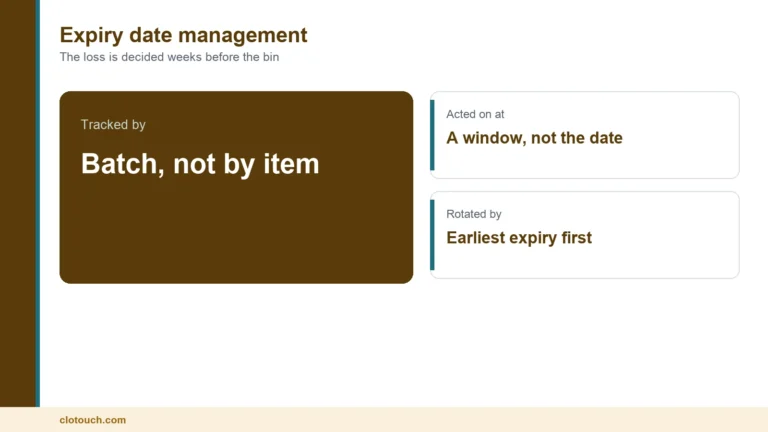
Expiry date management means batches, a near-expiry window and a rotation rule staff actually follow. Here is how to set it up so losses are found early, not at the bin.
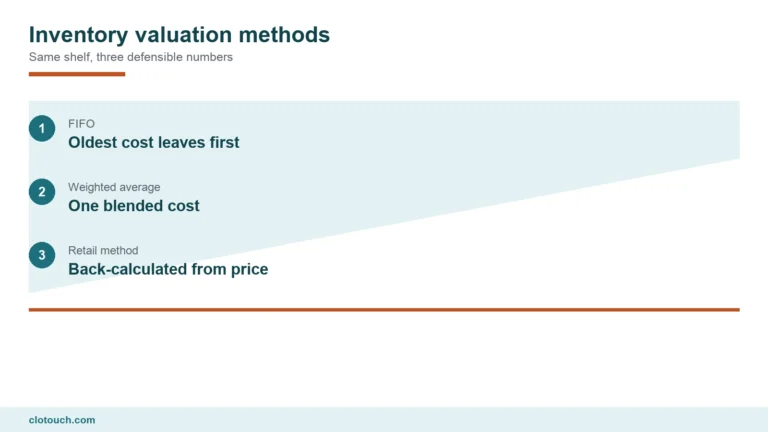
Inventory valuation methods decide what your stock is worth and what your margin looks like. Here is FIFO, weighted average and the retail method, with when each fits.
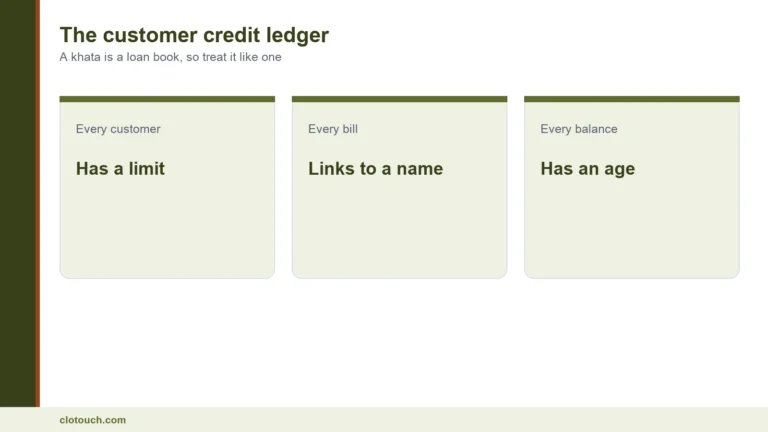
A customer credit ledger is a loan book. Here is how to set limits, record part payments, age the balances and collect without the awkward conversation at the counter.
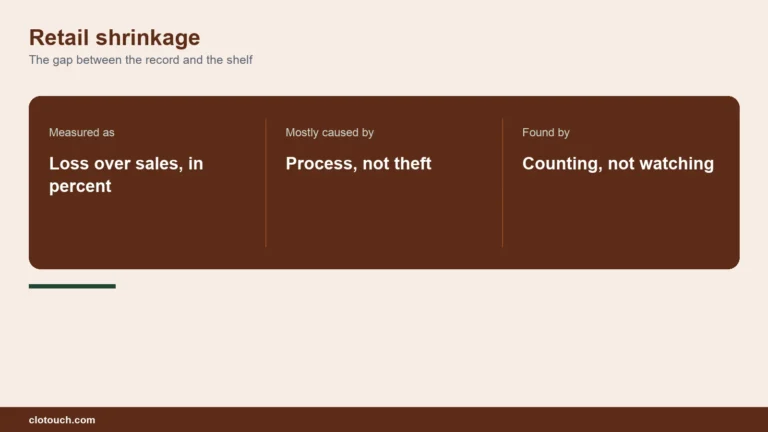
Retail shrinkage is mostly paperwork, not theft. Here are the six places stock actually goes missing, how to measure the rate, and what to fix in which order.
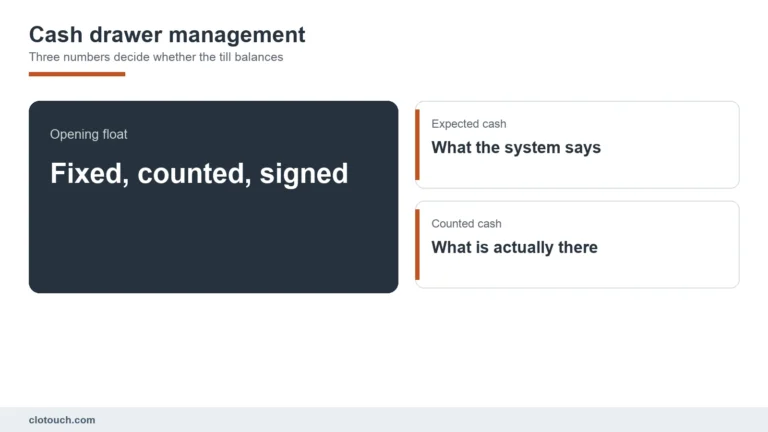
Cash drawer management is a float, a blind count and a short list of rules. Here is how to set it up so the till balances and a difference points somewhere useful.
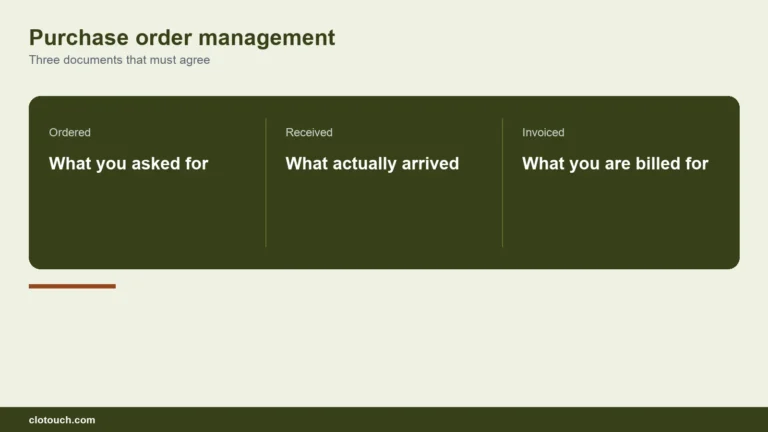
Purchase order management turns buying from memory into a record. Here is the PO to receipt to invoice flow, what to match at each step, and where shortages get lost.
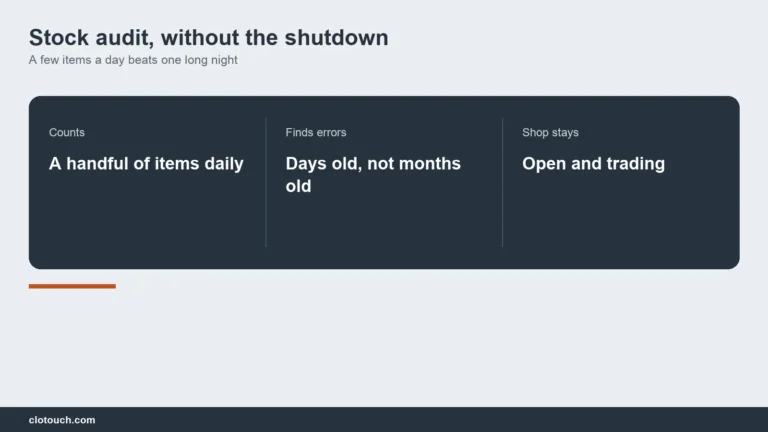
A stock audit does not need a closed shop and a long night. Cycle counting a few items a day finds the same errors earlier. Here is how to set it up and run it.

Dead stock in retail is cash standing on a shelf. Here is how to identify it from your own POS data, decide what to do with each group, and prevent the next round.
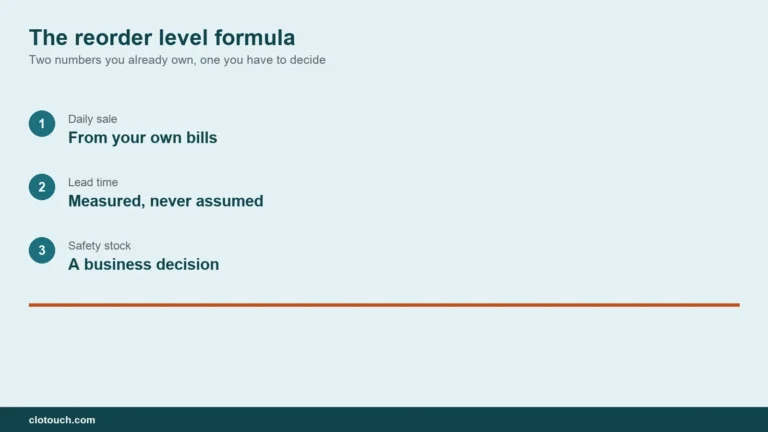
The reorder level formula is average daily sale times lead time, plus safety stock. Here is how to get both numbers out of your own POS data, item by item.
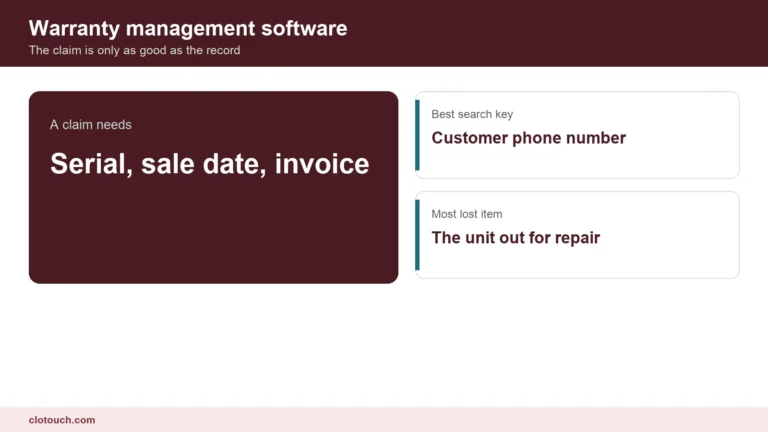
Warranty claims fail on proof, not policy. What warranty management software has to record at the point of sale so a claim two years later can be answered in seconds.