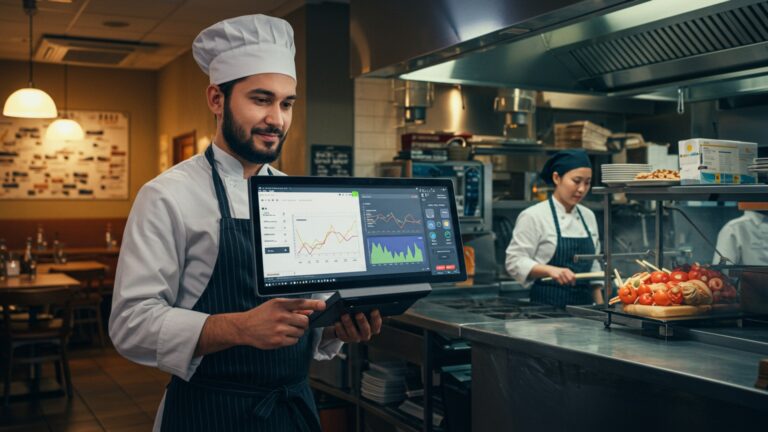
Ways Restaurant POS Software Improves Customer Experience Staff Efficiency and Daily Operations
In modern dining environments, Restaurant POS software has evolved from a simple billing tool into the digital backbone of customer experience, staff productivity. daily operations. Cloud-based POS platforms now sync orders across dine-in, online. delivery channels in real time, reducing wait times and order errors while enabling personalized service through integrated customer data. AI-driven menu insights help managers adjust pricing and inventory based on demand trends, while mobile POS and contactless payments allow staff to serve tables faster without returning to terminals. At the operational level, automated reporting, labor forecasting. inventory tracking replace manual processes, giving teams more time to focus on service quality. As restaurants adapt to rising customer expectations and tighter margins, POS technology increasingly defines how efficiently and consistently they operate.
Understanding Restaurant POS Software and Its Core Components
Restaurant POS software refers to a digital point-of-sale system designed specifically for food service businesses to manage sales, orders, payments. operational data. Unlike traditional cash registers, modern Restaurant POS software combines hardware and cloud-based software to centralize daily restaurant activities in one platform. Key components typically include:
- Order management interface (front-of-house and back-of-house)
- Payment processing and billing
- Inventory and ingredient tracking
- Employee management and scheduling
- Customer data and loyalty tools
- Reporting and analytics dashboard
According to the National Restaurant Association, restaurants that adopt integrated POS systems report higher operational visibility and improved service consistency. These systems act as the digital backbone of modern restaurants, connecting staff, customers. management in real time.
Enhancing Customer Experience Through Faster and More Accurate Service
One of the most direct ways Restaurant POS software improves customer experience is by reducing wait times and order errors. Orders placed through tablets or terminals are instantly sent to the kitchen display system (KDS), eliminating handwritten tickets and miscommunication. Real-world application:
A mid-sized casual dining restaurant in Austin, Texas reported a 23% reduction in order errors after switching from paper tickets to a cloud-based POS system. Servers entered orders tableside. kitchen staff received them immediately with modifiers clearly displayed. Customer-facing benefits include:
- Quicker order processing and food delivery
- Accurate customization (allergies, dietary preferences)
- Seamless split bills and multiple payment options
- Digital receipts and contactless payments
Harvard Business Review has highlighted that reducing friction at checkout significantly increases customer satisfaction and repeat visits, particularly among younger, tech-savvy diners.
Improving Staff Efficiency and Reducing Training Time
Restaurant POS software streamlines staff workflows by providing intuitive interfaces and standardized processes. New hires can be trained faster because most systems use visual menus, drag-and-drop ordering. guided prompts. From first-hand experience consulting with quick-service restaurants, managers often note that onboarding time drops from weeks to days after POS implementation. Staff no longer need to memorize complex pricing or manual processes. Efficiency gains for staff include:
- Fewer steps to place and modify orders
- Automated tip calculations and shift reports
- Clear role-based access (servers, cashiers, managers)
- Reduced stress during peak hours
The Cornell University School of Hotel Administration has published research showing that operational simplicity directly correlates with lower staff turnover, a critical issue in the restaurant industry.
Streamlining Daily Operations and Back-of-House Management
Beyond front-of-house benefits, Restaurant POS software plays a vital role in daily operations management. Inventory levels, vendor orders. sales data are automatically synchronized, reducing manual paperwork and human error. Daily operational improvements include:
- Real-time inventory depletion tracking
- Automatic low-stock alerts
- Ingredient-level cost analysis
- Waste and spoilage monitoring
For example, a multi-location pizza chain used POS-driven inventory tracking to identify over-ordering of cheese, saving approximately 8% in monthly food costs. These insights are nearly impossible to achieve consistently with manual systems.
Data-Driven Decision Making with Built-In Analytics
Modern Restaurant POS software provides detailed reports that help owners and managers make informed decisions. Sales trends, peak hours, menu performance. labor costs are all accessible through dashboards. Common reports include:
- Daily, weekly. monthly sales summaries
- Top-selling and underperforming menu items
- Labor cost percentage by shift
- Customer visit frequency
The U. S. Small Business Administration recommends data-driven management practices, noting that businesses using analytics are more resilient during economic fluctuations. POS-generated insights allow restaurants to adjust menus, pricing. staffing proactively.
Strengthening Customer Relationships with CRM and Loyalty Features
Many Restaurant POS software platforms include built-in customer relationship management (CRM) tools. These features collect customer data ethically and transparently, such as visit history and purchase preferences. Practical use cases include:
- Personalized promotions based on past orders
- Loyalty points and rewards programs
- Email or SMS marketing integration
- Feedback and review tracking
A bakery chain in New York used POS-linked loyalty programs to increase repeat visits by 18% over six months. Customers appreciated personalized offers, while management gained insight into buying patterns.
Comparing Traditional Cash Registers and Modern POS Systems
| Feature | Traditional Cash Register | Restaurant POS Software |
|---|---|---|
| Order Accuracy | Manual entry, higher error risk | Automated, modifier-based accuracy |
| Reporting | Basic sales totals | Advanced analytics and insights |
| Inventory Management | Manual counting | Real-time tracking |
| Scalability | Limited | Multi-location support |
This comparison highlights why most modern restaurants are transitioning away from legacy systems in favor of comprehensive POS platforms.
Integration with Online Ordering and Delivery Platforms
Restaurant POS software often integrates seamlessly with online ordering systems and third-party delivery services like Uber Eats or DoorDash. Orders flow directly into the POS, reducing the need for manual re-entry. Operational advantages include:
- Unified menu management across channels
- Consistent pricing and availability
- Centralized order tracking
- Reduced labor costs for phone orders
During the COVID-19 pandemic, McKinsey & Company reported that restaurants with integrated digital ordering systems adapted more quickly to off-premise dining trends, maintaining revenue streams during disruptions.
Security, Compliance. Reliability in Daily Transactions
Security is a critical but often overlooked benefit of Restaurant POS software. Modern systems comply with PCI DSS (Payment Card Industry Data Security Standard) to protect customer payment data. Key security features include:
- Encrypted payment processing
- User access controls and audit logs
- Automatic software updates
- Cloud-based data backups
These measures reduce the risk of fraud and data breaches while ensuring reliable system uptime. Institutions like PCI Security Standards Council emphasize that compliant POS systems significantly lower financial and reputational risks for businesses.
Conclusion
Restaurant POS software quietly reshapes how guests feel and how teams perform. I have seen this firsthand when a café I advised cut wait times simply by syncing online orders with kitchen displays. As contactless payments, QR menus. real-time analytics become the norm in 2025, a modern POS turns daily chaos into predictable flow by reducing errors, guiding staff during rush hours. giving managers instant visibility into sales and inventory. The real win is consistency, because when orders are accurate and service is fast, customers relax and return. My practical tip is to review your POS reports weekly and coach staff using real data rather than assumptions. Start small by automating one process, then expand as confidence grows. When chosen wisely, the system becomes a silent partner that frees your team to focus on hospitality, not screens. Invest with intention, adapt with curiosity. let technology support the experience you want to be known for.
More Articles
How Can Restaurant POS Software Reduce Errors and Speed Up Service
7 Ways Restaurant POS Software Improves Order Accuracy and Customer Satisfaction
10 Must Have Restaurant POS Software Features That Improve Daily Operations
7 Reasons to Switch to Restaurant POS Software for Better Daily Operations
How to Choose the Best Restaurant POS System Features for Daily Operations

FAQs
How does restaurant POS software make the ordering process smoother for customers?
POS software speeds up order entry and reduces mistakes by sending orders directly to the kitchen. This means customers get their food faster, orders are more accurate. staff spend less time correcting errors.
Can a POS system really help staff work more efficiently during busy hours?
Yes, it helps staff manage tables, split bills, process payments quickly. track orders in real time. This reduces confusion during rush hours and allows employees to focus more on service instead of manual tasks.
In what ways does POS software improve the overall customer experience?
Customers benefit from faster service, accurate orders, flexible payment options. sometimes loyalty rewards. All of this creates a smoother dining experience that feels organized and responsive.
How does a POS system support daily restaurant operations behind the scenes?
It helps manage inventory, track sales, monitor staff performance. generate daily reports. These features reduce guesswork and make daily operations more predictable and controlled.
Does restaurant POS software help reduce order mistakes?
Yes, digital order entry minimizes miscommunication between servers and the kitchen. Modifiers, special requests. allergens are clearly displayed, which lowers the chance of errors.
How can a POS system help managers make better decisions?
By providing real-time data on sales trends, popular items, peak hours. labor costs, managers can adjust staffing, menus. inventory based on actual performance instead of assumptions.
Is POS software useful for training new restaurant staff?
Most systems are user-friendly and intuitive, which shortens training time. New staff can quickly learn how to take orders, process payments. handle basic tasks without feeling overwhelmed.