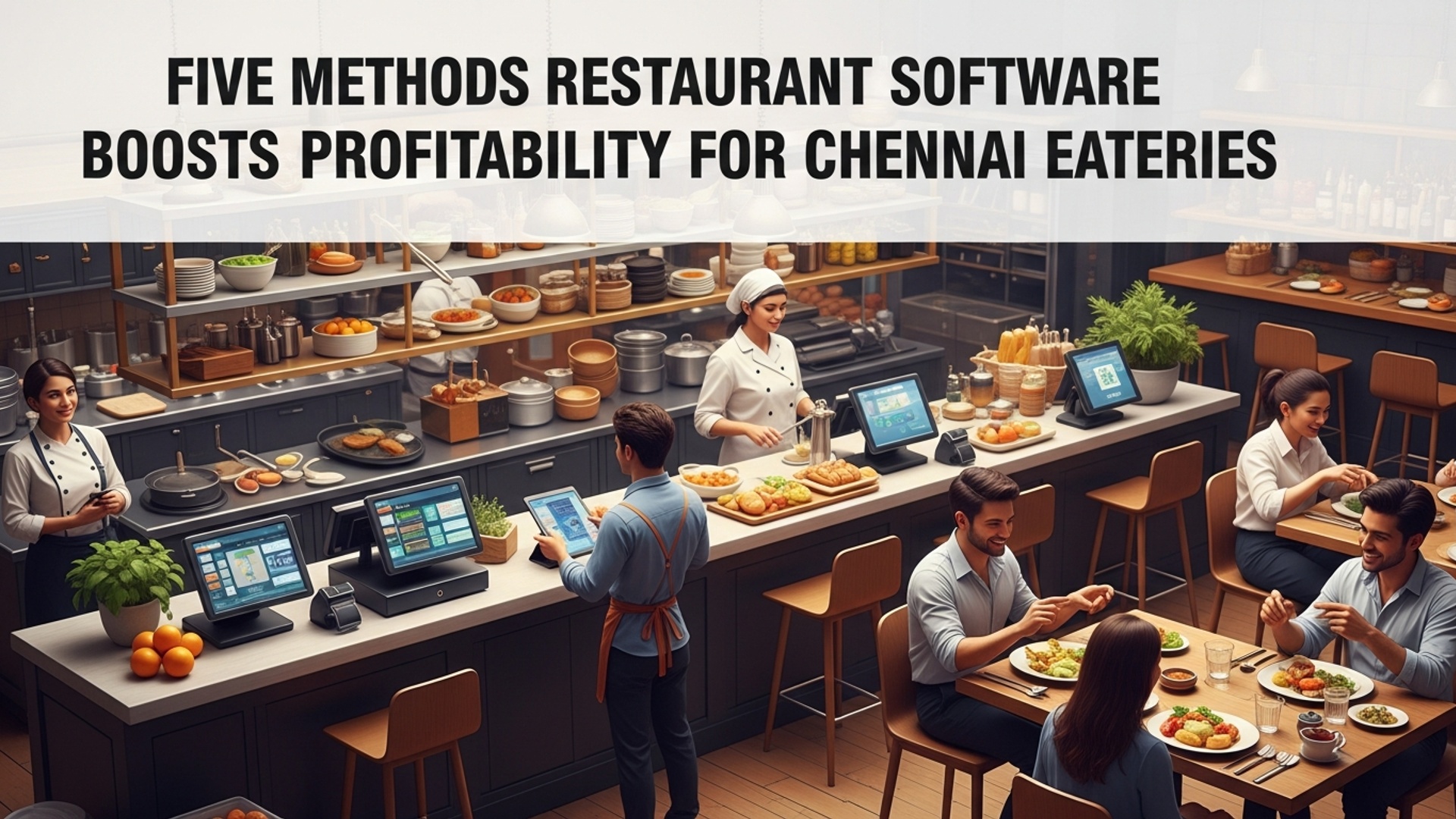
5 Ways Restaurant Software Boosts Profitability for Chennai Eateries
In Chennai’s intensely competitive culinary landscape, achieving sustained profitability requires more than just great food; it demands operational excellence. The strategic adoption of cutting-edge restaurant software in Chennai is fundamentally transforming how eateries manage their daily operations and boost their bottom line. A sophisticated POS system, central to this digital evolution, empowers restaurants to transcend traditional challenges by streamlining order processing, optimizing inventory control. providing crucial sales analytics. This integrated approach not only minimizes errors and reduces food waste but also enhances customer service and facilitates data-driven decision-making, directly impacting financial growth.

Streamlining Operations for Peak Efficiency with Restaurant Software in Chennai
In Chennai’s bustling culinary scene, where competition is as vibrant as the city’s food culture, operational efficiency is not just a benefit—it’s a necessity for survival and growth. This is where robust restaurant software in Chennai truly shines, acting as the central nervous system for any eatery, from a cozy tiffin center to a high-end multi-cuisine restaurant. By automating and integrating various aspects of daily operations, these systems drastically reduce manual errors and speed up service, directly impacting profitability.
At its core, a modern POS (Point of Sale) system streamlines the order-to-delivery cycle. Consider the traditional method: waiters jotting down orders, often leading to misinterpretations, lost slips, or delays. With a sophisticated POS, orders are taken digitally, either via handheld devices or fixed terminals. instantly transmitted to the kitchen or bar. This real-time communication minimizes errors, ensures accurate order preparation. significantly cuts down on wait times, leading to happier customers and faster table turnover.
Key components that contribute to this efficiency include:
- Order Management
- Kitchen Display Systems (KDS)
- Staff Management
Digital order taking, customizable menus, split billing. table management features mean staff can manage guest requests seamlessly. For instance, a busy restaurant in Mylapore can drastically reduce order mix-ups during peak hours by having every order clearly displayed on a Kitchen Display System (KDS).
These digital screens replace paper tickets in the kitchen, displaying orders clearly, prioritizing them. allowing chefs to mark items as prepared. This not only improves accuracy but also optimizes kitchen workflow, reducing food wastage due to incorrect orders.
Many integrated POS solutions offer features for attendance tracking, shift scheduling. performance monitoring. This helps manage labor costs more effectively and ensures adequate staffing during busy periods, preventing service slowdowns.
For example, a popular biryani outlet in Anna Nagar implemented a comprehensive POS system. Before, they struggled with long queues and order errors during lunch rushes. After integrating the new restaurant management software, they observed a 20% reduction in order processing time and a 15% decrease in food waste attributed to incorrect orders within the first three months. This tangible improvement in efficiency directly translated into increased customer satisfaction and higher revenue per table.
Optimizing Inventory and Minimizing Waste: A Profitability Game-Changer
Food costs are typically the largest variable expense for any restaurant. In Chennai, where fresh produce prices can fluctuate and specific regional ingredients are crucial, effective inventory management is paramount. Advanced restaurant software offers robust tools to track ingredients, manage recipes. minimize waste, directly bolstering a restaurant’s bottom line.
A sophisticated POS system extends beyond just sales transactions; it’s a powerful inventory control hub. Here’s how it helps:
- Real-time Stock Tracking
- Automated Reordering
- Recipe Management and Costing
- Waste Reduction
Every sale of an item deducts the corresponding ingredients from your digital inventory. This provides an accurate, real-time view of stock levels, eliminating the need for tedious manual counts and reducing discrepancies. Imagine a seafood restaurant in Besant Nagar knowing exactly how much fresh fish they have, preventing both shortages and spoilage.
Based on predefined par levels and sales data, the software can automatically generate purchase orders or alert management when stock is low. This ensures popular items are always available while preventing overstocking of slow-moving ingredients.
By inputting detailed recipes, the software can calculate the exact cost of each dish, down to the gram. This allows chefs and owners to grasp their gross profit margins per item and make informed decisions about pricing and menu adjustments. It also helps in standardizing portion sizes, which is crucial for consistency and cost control.
By accurately tracking inventory, identifying popular vs. unpopular items. monitoring spoilage, restaurants can make smarter purchasing decisions. Less waste means more profit.
Consider a case study: a well-known South Indian breakfast spot in T. Nagar struggled with fluctuating dosa batter costs and wastage. By implementing a POS with integrated inventory, they were able to track batter consumption per dosa, optimize their daily production. even identify peak consumption times. This led to a 10% reduction in ingredient costs and a significant decrease in daily waste, directly impacting their profitability.
Understanding your food costs is critical. Here’s a simplified example of how a POS helps track recipe costs:
{ "dish_name": "Masala Dosa", "ingredients": [ {"item": "Dosa Batter", "quantity_grams": 150, "unit_cost_per_gram": 0. 5}, {"item": "Potato Masala", "quantity_grams": 100, "unit_cost_per_gram": 0. 8}, {"item": "Sambar", "quantity_ml": 50, "unit_cost_per_ml": 0. 1}, {"item": "Chutney", "quantity_ml": 30, "unit_cost_per_ml": 0. 15} ], "calculated_cost": "Calculated by software based on ingredient costs"
}
This level of detail, automated by the software, provides invaluable insights into profitability per dish.
Enhancing Customer Experience and Building Loyalty
In Chennai’s competitive food landscape, repeat customers are the backbone of sustainable profitability. Modern restaurant software goes beyond transactional processing to help eateries build stronger relationships with their patrons, fostering loyalty and encouraging repeat business.
How does a comprehensive POS system contribute to this?
- Customer Relationship Management (CRM)
- Loyalty Programs
- Personalized Marketing
- Online Ordering Integration
- Feedback Management
Many POS solutions come with integrated CRM functionalities. This allows restaurants to capture customer data such as contact data, order history, dining preferences. even special occasions like birthdays or anniversaries. This data is invaluable for personalized marketing and service.
Easily set up and manage loyalty programs where customers earn points for purchases, which can then be redeemed for discounts or free items. A cafe in Nungambakkam, for instance, could offer a free coffee after every 10 purchases, managed seamlessly through their POS, encouraging regulars to return.
With customer data, restaurants can send targeted promotions. Imagine sending a special discount on Italian food to customers who frequently order pasta, or a birthday greeting with a complimentary dessert offer. This highly personalized approach has a much higher conversion rate than generic marketing.
Seamless integration with online ordering platforms means customers can order directly from your website or app, providing a convenient experience. The POS captures these orders directly, streamlining the process and ensuring accuracy.
Some systems include tools for collecting customer feedback, allowing restaurants to quickly address concerns and improve service quality, turning potentially negative experiences into positive ones.
A recent study by Restaurant Business Online highlighted that acquiring a new customer can cost five times more than retaining an existing one. By leveraging the CRM capabilities of restaurant software, Chennai eateries can significantly improve customer retention rates. For instance, a chain of South Indian vegetarian restaurants used their POS data to identify their most loyal customers and offered them exclusive early access to new menu items, leading to increased engagement and word-of-mouth marketing.
Data-Driven Decision Making and Performance Insights
Gone are the days when gut feeling was the primary driver of restaurant business decisions. Today, data is king. advanced restaurant software provides an unparalleled window into an eatery’s performance, enabling data-driven decisions that directly impact profitability.
A robust POS system collects a wealth of data on every aspect of your operation, which it then processes into actionable reports and analytics:
- Sales Analytics
- Inventory Reports
- Staff Performance
- Customer Insights
- Financial Reporting
grasp your peak hours, best-selling dishes, average check size. sales trends over time (daily, weekly, monthly, yearly). This helps in optimizing staffing, menu engineering. promotional strategies. Which items are most profitable? Which items sell best on weekends? These insights are readily available.
Detailed reports on ingredient consumption, waste. stock levels help identify inefficiencies and opportunities for cost savings.
Track individual server performance, including average table turnover time, upsell rates. sales figures. This data can inform training needs, incentive programs. staffing adjustments.
As mentioned, CRM data provides insights into customer preferences, loyalty. spending habits, enabling targeted marketing and personalized experiences.
Generate comprehensive financial reports, including profit and loss statements, daily sales summaries. tax reports, simplifying accounting and financial planning.
For example, a modern cafe in Adyar used their POS analytics to discover that their evening dessert sales were significantly lower than expected, despite high foot traffic. By analyzing the data, they realized their dessert menu was not prominently displayed and their staff weren’t actively promoting it. They adjusted their menu display and conducted a brief staff training on upselling, resulting in a 30% increase in dessert sales within a month. This kind of precise, data-backed intervention is only possible with comprehensive restaurant software.
Here’s a simplified representation of a sales report structure that a POS system might generate:
{ "report_type": "Daily Sales Summary", "date": "2023-10-27", "total_revenue": 75000. 00, "cash_sales": 30000. 00, "card_sales": 40000. 00, "online_sales": 5000. 00, "top_selling_items": [ {"item": "Chicken Biryani", "quantity": 120, "revenue": 24000. 00}, {"item": "Filter Coffee", "quantity": 150, "revenue": 4500. 00}, {"item": "Gobi Manchurian", "quantity": 80, "revenue": 12000. 00} ], "average_check_size": 450. 00, "transactions_count": 167
}
Such detailed reports are indispensable for strategic planning and identifying areas for improvement, making the investment in restaurant software in Chennai a clear path to informed growth.
Boosting Online Presence and Delivery Efficiency
The digital revolution has transformed how Chennaiites order food, with online delivery platforms becoming integral to the dining experience. For restaurants, effectively managing this online ecosystem is crucial for expanding reach and maximizing revenue. Integrated restaurant software provides the tools to not only navigate this landscape but thrive in it.
Here’s how a comprehensive POS system enhances online presence and delivery operations:
- Integrated Online Ordering Platform
- Third-Party Aggregator Management
- Delivery Management and Logistics
- Unified Menu Management
Many modern POS systems offer direct integration with your restaurant’s website or a custom mobile app for online ordering. This allows customers to place orders directly, bypassing third-party aggregator commissions, thus retaining a larger share of the revenue. The orders flow directly into the POS and KDS, just like dine-in orders, ensuring a seamless workflow.
While direct ordering is preferable, partnering with aggregators like Swiggy and Zomato is often necessary for broader reach. Some advanced POS solutions offer integration with these platforms, consolidating orders from multiple sources into a single interface. This eliminates the need for multiple tablets and manual data entry, reducing errors and speeding up processing.
For restaurants handling their own deliveries, the software can assist with managing delivery zones, assigning drivers, tracking delivery status. optimizing routes. This ensures timely deliveries, which is a critical factor for customer satisfaction in the online food delivery space.
Instead of updating menus separately on your POS, website. various aggregator platforms, an integrated system allows you to manage your menu from a single point. Changes made in the POS reflect across all channels instantly, saving time and preventing discrepancies.
Consider a popular pizza chain in Egmore. Before integrating their POS with their online ordering and delivery systems, they struggled with manual order entry from multiple tablets, leading to delays and incorrect orders. Post-integration, all online orders, whether from their website or aggregators, now appear on a single screen. This reduced order processing time by 25% and significantly improved delivery accuracy, leading to a noticeable increase in positive customer reviews and repeat online orders.
The ability to manage diverse sales channels—dine-in, takeaway. multiple online platforms—from a single, unified system is a powerful advantage that restaurant software offers. It not only streamlines operations but also provides a holistic view of sales performance across all channels, empowering Chennai eateries to make strategic decisions for sustainable growth in the digital age.
Conclusion
From my observations across Chennai’s dynamic culinary landscape, the most successful eateries aren’t just serving great food; they’re strategically leveraging smart technology to stay ahead. Investing in the right restaurant software isn’t merely an expense; it’s a strategic move to optimize every facet of your operations, from precise inventory management minimizing food waste – a critical factor with fluctuating ingredient costs for Chennai’s diverse menus – to speeding up service during peak hours like the bustling lunch rush. This digital transformation directly translates into enhanced efficiency and, crucially, higher profitability. My personal tip for any Chennai restaurateur considering this leap: don’t aim for a complete overhaul immediately. Start by identifying your biggest operational bottleneck, perhaps managing online orders seamlessly during festivals or gaining deeper insights into popular dishes with local preferences. then seek software that directly addresses that challenge. This focused approach ensures immediate returns and builds confidence. Embrace this digital shift, as it empowers you to elevate customer experiences, boost efficiency. ultimately, significantly enhance your bottom line. The future of Chennai’s vibrant food scene belongs to those who innovate; make sure your establishment is leading the charge.
More Articles
Unlock Success 5 Ways With a Smart POS System in Chennai
How Restaurant POS Software Can Boost Profits And Streamline Daily Operations
7 Essential Ways Restaurant POS Software Boosts Your Daily Business Profits
Top 7 Features Your POS Billing Software in Chennai Must Have
Streamline Operations 6 Key Benefits of Restaurant POS Software for Owners

FAQs
Why should a Chennai restaurant owner even consider using new software?
It helps streamline daily operations, reduce common errors in ordering and billing. ultimately increase your bottom line by making everything from inventory to customer service more efficient.
How does restaurant software specifically help cut down on food waste, especially with Chennai’s diverse ingredients?
Advanced inventory features track ingredients in real-time, alert you when stock is low or nearing expiry. help forecast demand based on sales data. This ensures you buy just what you need, significantly reducing spoilage and waste.
Can this software actually help me get more repeat customers?
Absolutely! Many systems include tools for customer relationship management, like loyalty programs, personalized offers based on past orders. easy feedback collection, all designed to encourage diners to come back often.
My restaurant gets really busy during peak hours. How can software help handle the rush better?
It speeds up order taking and processing with intuitive POS systems, automates kitchen display systems to improve communication. helps manage table turnover efficiently, ensuring smoother service even when it’s packed.
I’m not great with numbers. Does the software give me useful insights without a lot of hassle?
Yes, it collects data on sales, popular dishes, busiest times. staff performance, then presents it in easy-to-comprehend reports and dashboards. This helps you make smarter, data-driven decisions about menus, staffing. marketing without needing to be an expert.
Is investing in restaurant software really worth it for a smaller eatery in Chennai?
Definitely! While there’s an initial cost, the savings from reduced waste, improved operational efficiency, better staff management. increased customer loyalty often lead to a quick return on investment, boosting your overall profitability significantly over time.
How does software make managing my staff easier and more productive?
It can help with creating optimal schedules, tracking staff performance and attendance. even integrating with payroll data. This frees up your time to focus on other aspects of the business and ensures your team is deployed effectively where they’re needed most.