Master 8 Ways Restaurant POS Software Improves Operational Efficiency Daily
In today’s hyper-competitive culinary landscape, where razor-thin margins and evolving customer expectations dominate, mastering operational efficiency is paramount for restaurant survival. Legacy systems often struggle to keep pace with modern demands like integrated online ordering, contactless payments. real-time inventory management. A robust Restaurant POS software is no longer a luxury but a critical strategic asset, transforming daily operations from the front-of-house to the back-of-house. It empowers establishments to streamline order processing, optimize staff allocation amidst labor challenges. leverage data analytics to predict demand and minimize food waste. This advanced technological backbone ensures seamless service delivery, enhances customer loyalty programs. ultimately drives profitability in an increasingly digital-first dining world.
Streamlined Order Management and Accuracy
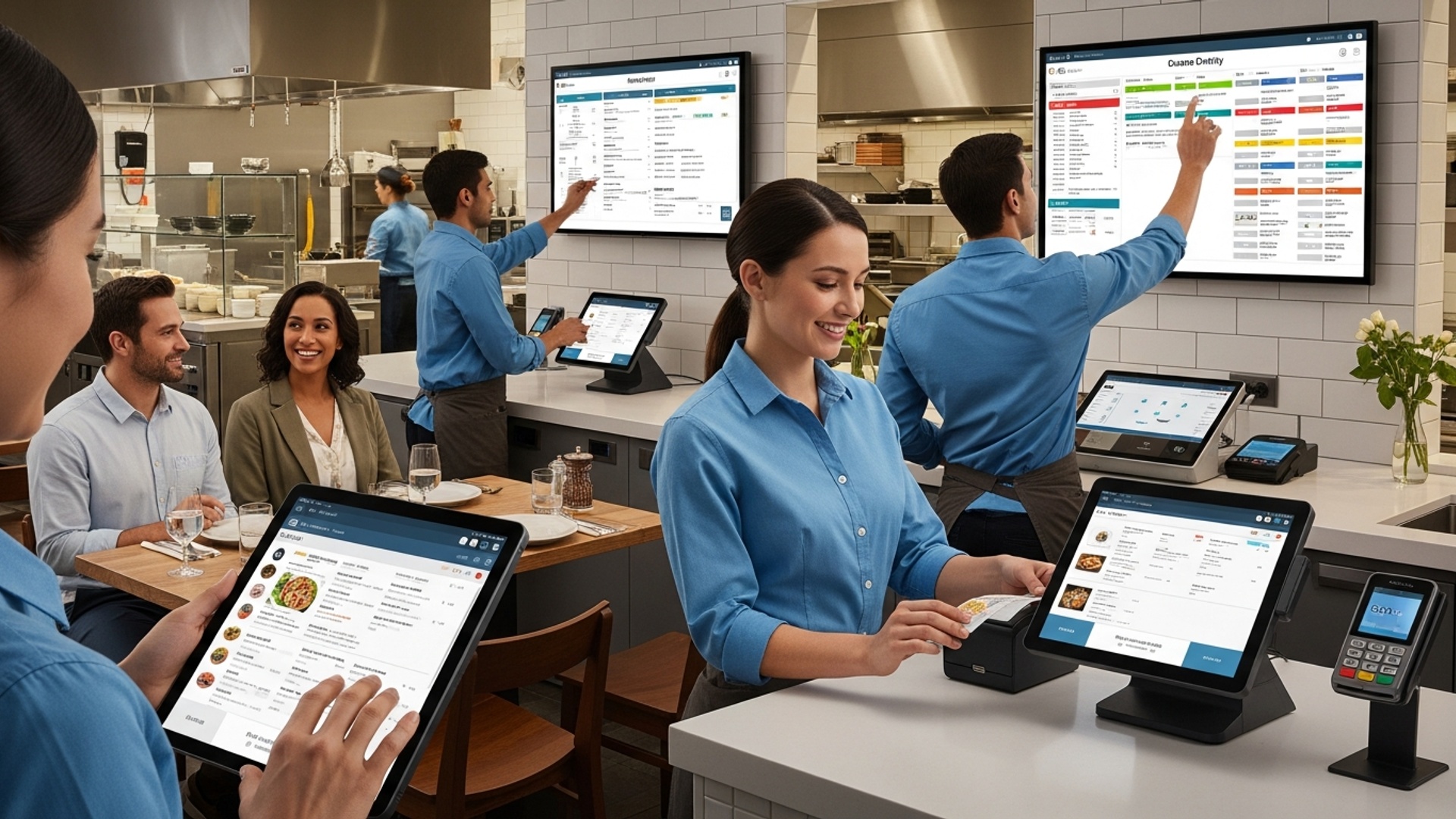
At the heart of any successful restaurant operation is efficient order taking and processing. Manual systems, with their handwritten tickets and verbal relaying, are ripe for errors and delays. Modern Restaurant POS software fundamentally transforms this crucial aspect.
Order management refers to the entire process of receiving a customer’s request, transmitting it to the kitchen or bar. ensuring its accurate and timely preparation and delivery.
- Digital Input
- Instant Transmission
- Accurate Modifiers
- Split Checks & Table Management
Servers input orders directly into a tablet or terminal. This eliminates illegible handwriting and common miscommunications.
Once an order is confirmed, it’s immediately sent to the relevant kitchen display system (KDS) or printer. This cuts down on wait times and ensures the kitchen starts preparation without delay.
Complex orders with special requests (e. g. , “no onions,” “extra sauce,” “allergy alert”) are handled precisely. The system prompts for necessary modifiers, reducing errors and ensuring customer satisfaction.
Easily split bills by item or evenly among guests. manage table statuses (e. g. , seated, ordered, eating, paid) for optimized seating efficiency.
Consider a busy Friday night at “The Urban Bistro.” Before adopting Restaurant POS software, servers juggled notepads, often mishearing orders over the din, leading to frustrated customers and wasted food. Now, with handheld POS devices, a server can take an order at the table, instantly adding customizations like “gluten-free bun” or “steak medium-rare.” This order appears immediately on the KDS, streamlining the kitchen workflow. “Our order accuracy has jumped by 95% since implementing our POS system,” notes Sarah Chen, owner of The Urban Bistro. “Guests are happier. our kitchen staff can focus on cooking, not deciphering.”
When selecting Restaurant POS software, prioritize an intuitive interface for order entry and robust modifier management. Train your staff thoroughly on its features, especially for complex orders, to maximize the benefits of improved accuracy and speed.
Intelligent Inventory Control and Waste Reduction
One of the most significant drains on a restaurant’s profitability is inefficient inventory management. Spoilage, over-ordering. inaccurate stock counts can lead to substantial financial losses. This is where modern Restaurant POS software truly shines.
Inventory control refers to the process of managing stock levels, ordering, storing. utilizing ingredients and supplies to meet customer demand while minimizing waste and cost.
- Real-time Tracking
- Automated Alerts
- Recipe Management
- Supplier Management & Ordering
- Waste Tracking
Every item sold or used in a recipe automatically deducts from your stock levels, providing an immediate, accurate overview of what you have on hand.
Set thresholds for key ingredients. the system will notify you when stock is low, preventing unexpected shortages.
Input your recipes into the POS system. it will precisely track ingredient depletion based on sales, giving you granular control over food costs.
Maintain a database of suppliers, track purchase orders. even generate suggested reorder lists based on historical sales data and current stock.
Easily log spoiled or wasted items, providing data to identify patterns and areas for improvement.
Imagine a bustling pizzeria. In the past, the manager would manually count cheese, pepperoni. dough at the end of each night. Now, with a comprehensive Restaurant POS software, every pizza sold automatically reduces the ingredient count. If mozzarella cheese dips below a pre-set level, the system sends an alert. a suggested reorder list is ready for the supplier, preventing a late-night panic for ingredients. This precise tracking, as highlighted by industry experts, can reduce food waste by up to 10-15%.
Fully leverage your Restaurant POS software’s inventory features. Invest time in accurately inputting recipes and current stock levels. Regularly review inventory reports to identify slow-moving items, reduce over-ordering. pinpoint sources of waste. This proactive approach ensures you always have what you need without tying up excessive capital in perishable goods.
| Feature | Manual Inventory Management | Restaurant POS Software Inventory |
|---|---|---|
| Stock Tracking | Periodic physical counts, prone to human error, often outdated. | Real-time, automated deduction with every sale, high accuracy. |
| Reordering | Based on memory or inconsistent checks, often reactive, leading to shortages or excess. | Automated low-stock alerts, data-driven suggested orders, proactive. |
| Waste Identification | Difficult to pinpoint exact sources or quantities of waste. | Detailed tracking of spoilage and waste, identifying trends for reduction. |
| Food Costing | Complex manual calculations, often estimated. | Precise recipe costing, real-time calculation of food cost percentages. |
Enhanced Customer Experience and Loyalty
In today’s competitive dining landscape, a superior customer experience is paramount. Restaurant POS software goes beyond just transactions, empowering businesses to build stronger relationships and foster loyalty.
Customer experience encompasses all interactions a customer has with a business, from initial contact to post-meal follow-up. Loyalty programs are structured marketing efforts that reward customers for repeat business.
- Faster Service
- Personalized Service
- Integrated Loyalty Programs
- Accurate Billing
- Flexible Payment Options
Quicker order taking and payment processing mean less waiting for customers, enhancing their overall satisfaction.
Some advanced Restaurant POS software can store customer preferences, dietary restrictions. past orders. This allows servers to offer personalized recommendations and anticipate needs.
Seamlessly track loyalty points, apply discounts. manage gift cards directly through the POS, making it effortless for customers to participate and for staff to administer.
Eliminating billing errors and providing clear, detailed receipts builds trust and prevents disputes.
Offering diverse payment methods, including mobile and contactless options, caters to modern consumer preferences.
At “Café Bella,” a customer named Maria is a regular. Her Restaurant POS software remembers her usual order – a vanilla latte with almond milk – and her preference for a window seat. When she arrives, the barista can greet her by name and ask if she’d like “the usual,” processing her loyalty points with a single tap. This level of personalized, efficient service makes Maria feel valued and ensures she keeps coming back. According to a study by Deloitte, personalized experiences can increase customer retention by up to 20%.
Leverage your Restaurant POS software’s CRM (Customer Relationship Management) capabilities. Encourage staff to use customer profiles for personalized interactions. Promote your integrated loyalty program actively to convert first-time visitors into loyal patrons.
Optimized Staff Management and Productivity
Managing a restaurant team effectively is crucial for smooth operations. Restaurant POS software provides tools that streamline staff-related tasks, leading to increased productivity and better labor cost control.
Staff management involves scheduling, time tracking, performance monitoring. payroll preparation for employees.
- Digital Time Clocks
- Integrated Scheduling
- Performance Tracking
- Tip Management
- Access Control
Employees clock in and out directly through the POS, providing accurate timekeeping records and eliminating manual timesheet errors.
Some Restaurant POS software includes scheduling modules that allow managers to create and distribute schedules, manage shift swaps. forecast labor needs based on sales data.
Generate reports on individual employee sales, average check sizes. table turns. This data helps identify top performers and areas where training might be needed.
Automate tip pooling and distribution, ensuring fairness and transparency among staff.
Assign different permission levels to staff members, ensuring that only authorized personnel can perform certain actions (e. g. , voids, discounts, cash drawer access).
Mark, the manager at “Grill House,” used to spend hours each week manually creating schedules and calculating payroll. Now, his Restaurant POS software allows him to build a schedule in minutes, factoring in employee availability and sales forecasts. The digital time clock accurately tracks hours. at the end of the pay period, the data seamlessly integrates with his payroll system. He can also see that his server, Jessica, consistently has the highest average check size, informing his decision to give her more high-traffic shifts and offer her mentoring opportunities. This efficiency saves Mark several hours a week, which he can now dedicate to improving customer service.
Utilize the scheduling and time-tracking features of your Restaurant POS software to reduce administrative burden and ensure accurate labor costing. Regularly review employee performance reports to identify areas for growth and reward excellence, fostering a more motivated and productive team.
Robust Data Analytics and Reporting for Strategic Decisions
In the modern business world, data is king. Restaurant POS software is a powerful data collection engine, providing invaluable insights that can drive strategic decision-making and significantly improve operational efficiency and profitability.
Data analytics involves examining raw data to draw conclusions and identify trends, while reporting is the process of presenting these findings in an understandable format.
- Comprehensive Sales Reports
- Peak Hour Identification
- Menu Item Performance
- Labor Cost Analysis
- Profit Margin Tracking
Access detailed reports on daily, weekly, monthly. annual sales. Break down sales by menu item, category, time of day, or even server.
comprehend when your busiest periods are, allowing for optimized staffing and resource allocation.
Identify your best-selling dishes and those that are underperforming. This data is critical for menu engineering and pricing strategies.
Monitor labor costs as a percentage of sales, helping you make informed decisions about staffing levels.
With integrated inventory and recipe costing, you can accurately track the profit margins for each menu item.
“The Coffee Nook” used its Restaurant POS software’s reporting features to discover that while their specialty lattes were popular, their profit margin on them was lower than expected due to ingredient costs. They also noticed a significant spike in pastry sales between 7 AM and 9 AM. Armed with this data, the owner adjusted latte pricing slightly and increased their pastry orders for the morning rush, leading to a 7% increase in overall daily profit within a month. As industry consultant Gordon Ramsay often emphasizes, “You can’t fix what you don’t measure.”
Make a habit of regularly reviewing the various reports offered by your Restaurant POS software. Don’t just look at total sales; delve into item-level and hourly data. Use these insights to refine your menu, optimize staffing, identify marketing opportunities. make pricing adjustments that boost your bottom line.
Seamless and Secure Payment Processing
Payment processing is a critical touchpoint in the customer journey. Slow, insecure, or limited payment options can frustrate guests and hinder operational flow. Restaurant POS software revolutionizes this by offering diverse, integrated. secure payment solutions.
Payment processing refers to the system that handles financial transactions between customers and the restaurant, including credit cards, debit cards, mobile payments. cash.
- Integrated Solutions
- Diverse Payment Options
- Faster Transactions
- Enhanced Security (PCI Compliance)
- Easy Split Payments
The POS system is directly linked to payment terminals, eliminating manual entry of amounts and reducing errors.
Support for credit/debit cards, EMV chip cards, NFC contactless payments (Apple Pay, Google Pay). mobile payment apps caters to all customer preferences.
Integrated systems process payments significantly faster than standalone terminals, reducing checkout times.
Reputable Restaurant POS software adheres to Payment Card Industry Data Security Standard (PCI DSS) requirements, protecting sensitive customer data and reducing fraud risk.
Effortlessly split bills among multiple guests, whether by equal portions or specific items.
At “Pasta Paradise,” the previous system required servers to manually type amounts into a separate card machine, leading to occasional miskeys and delays, especially with large parties splitting checks. With their new Restaurant POS software, a server simply selects “pay” on their handheld device. the customer can tap their card or phone on an integrated terminal. A group of six can easily divide their bill into three credit card payments and three cash payments, all handled within seconds. This efficiency reduces server stress and allows for quicker table turns, directly impacting revenue.
Ensure your Restaurant POS software offers robust, integrated payment processing that supports a variety of payment methods, including contactless options. Prioritize systems that are PCI compliant to protect your business and your customers’ data. This not only speeds up service but also builds customer trust.
Minimizing Errors, Waste. Theft
Operational efficiency isn’t just about speed; it’s also about preventing losses. Errors, avoidable waste. internal theft can significantly erode profit margins. Restaurant POS software acts as a crucial safeguard against these common challenges.
This refers to implementing systems and controls to reduce mistakes in order processing, minimize spoilage and unused ingredients. prevent unauthorized removal of cash or inventory by employees.
- Digital Audit Trail
- Controlled Voids and Discounts
- Accurate Cash Management
- Recipe-Based Inventory Depletion
- User Permissions
Every transaction, void, discount. cash drawer action is logged and time-stamped, creating a transparent record of all activity.
Require manager approval or specific permissions for voids and discounts, preventing unauthorized actions.
Features like cash drawer reconciliation, shift reports. end-of-day cash counts help pinpoint discrepancies quickly.
As mentioned in inventory, tracking ingredient use precisely reduces the likelihood of over-portioning or unexplained ingredient disappearance.
Grant staff members access only to the functions necessary for their role, limiting opportunities for misuse.
A small bar, “The Pour House,” was experiencing unexplained cash shortages and high liquor costs. After installing Restaurant POS software, the owner could track every drink poured (via sales data), every voided order (requiring a manager override). every cash drawer opening. Within weeks, they identified a pattern of excessive voids by a particular bartender, which, upon investigation, revealed unauthorized complimentary drinks. The digital audit trail provided irrefutable evidence, allowing the owner to address the issue directly. This proactive monitoring, as emphasized by the National Restaurant Association, is key to maintaining financial integrity.
Utilize the security features of your Restaurant POS software, such as setting strict user permissions and requiring manager approval for sensitive actions. Regularly review void, discount. cash reconciliation reports to identify and address potential areas of concern quickly. This vigilance can save your business substantial amounts of money.
Streamlined Third-Party Integrations
A restaurant operates with more than just a POS system; it often relies on reservation platforms, online ordering apps, delivery services. accounting software. The ability of Restaurant POS software to seamlessly integrate with these third-party tools is a powerful driver of operational efficiency.
Third-party integration refers to the capability of one software system (the POS) to connect and exchange data with other independent software applications, allowing them to work together cohesively.
- Online Ordering Platforms
- Delivery Services
- Accounting Software
- Reservation Systems
- Loyalty & Marketing Tools
Orders placed through your website or third-party apps (e. g. , DoorDash, Uber Eats) flow directly into your POS, eliminating manual re-entry and reducing errors.
Integrations streamline the dispatching process and ensure accurate order fulfillment for off-premise dining.
Sales data, labor costs. inventory expenses can automatically sync with accounting platforms (e. g. , QuickBooks, Xero), simplifying bookkeeping and reducing manual data entry errors.
Some Restaurant POS software can integrate with reservation platforms, allowing for a unified view of table availability and guest insights.
Connect with dedicated CRM or marketing automation platforms for more advanced customer engagement strategies.
“Sushi Spot” initially struggled with managing online orders. Orders would come in via a separate tablet, requiring a staff member to manually input them into the POS, then alert the kitchen. This led to delays, transcription errors. frustration. After implementing Restaurant POS software with robust online ordering integration, all orders, whether from their website or a delivery app, now flow directly to the KDS. Inventory is automatically updated. the accounting system receives daily sales figures without any manual intervention. This integration saves countless hours of administrative work and ensures every order, regardless of its origin, is handled with the same efficiency.
When choosing Restaurant POS software, consider its integration capabilities. Look for a system that offers pre-built integrations with the essential tools your business uses or plans to use. A well-integrated ecosystem reduces manual tasks, minimizes errors. creates a unified operational workflow, ultimately saving time and resources.
Conclusion
Mastering your restaurant’s operational efficiency daily hinges on a robust POS system, transforming mundane tasks into strategic advantages. My personal tip is to not just install a POS. to actively leverage its data analytics capabilities; I’ve seen firsthand how insights into peak hours or popular dishes can drastically optimize staffing and inventory, directly reducing waste and improving service flow. Modern cloud-based POS solutions, a recent development, go beyond simple transactions, offering predictive tools that help anticipate demand, ensuring your kitchen runs like a well-oiled machine and your front-of-house never misses a beat. Embrace this technology not as an expense. as an indispensable partner in your restaurant’s growth journey. By integrating these 8 powerful strategies, from streamlined order management to precise inventory control, you’re not just saving time; you’re building a more resilient, profitable. future-ready business. The restaurant landscape is evolving rapidly. those who harness their POS to its fullest potential will undoubtedly lead the way. For further strategies to enhance your efficiency, explore: Master 5 Smart Strategies to Boost Restaurant Efficiency with POS Systems
More Articles
How To Choose The Best Restaurant POS System Essential Features Guide
Avoid 6 Common Restaurant POS Software Problems with These Simple Solutions
Master Key Restaurant POS System Features to Boost Your Operations
Unlock 8 Practical Strategies to Maximize Your Restaurant POS Software

FAQs
How does this POS software actually make my restaurant run smoother every day?
It streamlines everything from taking orders quickly to managing your inventory in real-time. You’ll see faster table turns, fewer errors. staff spending less time on manual tasks, all contributing to a more efficient daily operation.
Can it really speed up how we take orders and get food to tables?
Absolutely! With features like intuitive touch screens, customizable menus. direct kitchen display system (KDS) integration, orders go straight to the kitchen instantly. This minimizes delays, reduces miscommunications. helps deliver food faster and more accurately.
What about keeping track of ingredients and supplies? Is that easier now?
Definitely. The software offers robust inventory management, tracking ingredients as they’re used and alerting you when stock is low. This helps prevent waste, ensures you’re always stocked with popular items. makes ordering supplies much more precise.
How does it help my team work better and faster?
It empowers your staff with clear order flows, easy table management. simplified payment processing. It also helps with shift scheduling and performance tracking, reducing administrative burdens and allowing them to focus more on serving customers.
I need better insights into my sales. Does it provide that?
Yes, it provides comprehensive reporting and analytics. You can track sales trends, popular menu items, peak hours. even employee performance. These insights are crucial for making informed business decisions and optimizing your operations.
Will using this software improve my customers’ experience?
Absolutely! Faster service, fewer order errors. seamless payment options all contribute to a more enjoyable dining experience. Plus, features like loyalty programs can help you build stronger relationships with your regulars.
Beyond just being ‘efficient,’ does it save me money in the long run?
By reducing food waste through better inventory, minimizing order errors that lead to comps, optimizing staff scheduling. providing data to make smarter purchasing decisions, the software definitely helps cut costs and improve your bottom line over time.