7 Benefits of Cloud Based Restaurant POS Software for Growing Businesses
As restaurants scale beyond a single location, operational complexity rises fast. cloud-based Restaurant POS software has become a critical growth enabler rather than a back-office tool. Modern platforms now sync real-time sales data across locations, integrate seamlessly with mobile ordering and delivery apps. apply AI-driven analytics to forecast demand and optimize menus. With contactless payments, QR ordering. cloud-managed security updates becoming standard in 2025, operators can launch new stores faster while maintaining consistent service and compliance. Cloud architecture also supports remote menu updates, centralized inventory tracking. labor management aligned with evolving wage regulations, giving growing businesses tighter control without added infrastructure. The result is a more agile, data-informed operation that scales efficiently while meeting rising customer expectations.
1. Anywhere, Anytime Access with Real-Time Data Synchronization
Cloud based Restaurant POS software allows restaurant owners and managers to access their business data from anywhere with an internet connection. Unlike traditional on-premise systems that require you to be physically present at the restaurant, cloud systems store data securely on remote servers.
Cloud-based software refers to applications hosted on remote servers and accessed through the internet rather than installed locally on a single device.
- Owners can monitor sales, labor costs. inventory remotely.
- Multi-location restaurants can view performance across all outlets in real time.
- Menu updates or price changes sync instantly across all terminals.
A regional café chain expanding from one to five locations used cloud Restaurant POS software to track daily sales from a single dashboard. This allowed leadership to identify underperforming locations early and adjust staffing and promotions without waiting for end-of-week reports.
According to the National Restaurant Association, real-time data access is a key driver for operational agility in modern restaurant management.
2. Lower Upfront Costs and Predictable Monthly Pricing
Traditional POS systems often require expensive hardware, servers. licensing fees. Cloud based Restaurant POS software typically operates on a subscription model, significantly lowering the barrier to entry for small and growing businesses.
| Component | Traditional POS | Cloud Based POS |
|---|---|---|
| Initial setup | High upfront hardware and server costs | Minimal setup with standard devices |
| Software updates | Paid upgrades | Included in subscription |
| Maintenance | On-site IT support | Managed by provider |
For restaurants planning to scale, predictable monthly expenses make budgeting easier and free up capital for marketing, staff training, or menu development.
Industry analysts from Gartner consistently note that subscription-based SaaS platforms reduce long-term total cost of ownership for small and medium-sized businesses.
3. Faster Scalability for Multi-Location Growth
As restaurants grow, their technology must scale without disruption. Cloud based Restaurant POS software is designed to support rapid expansion, whether opening a second location or launching a franchise model.
- New locations can be added without complex installations.
- Menus, pricing. tax rules can be standardized or customized per location.
- Centralized reporting simplifies performance comparisons.
A fast-casual brand expanding across three states used a cloud POS to replicate its operational setup in each new store within days. This reduced onboarding time and ensured consistent customer experiences.
The International Franchise Association highlights scalable cloud systems as a foundational requirement for franchise-ready restaurant brands.
4. Automatic Software Updates and Enhanced Security
Keeping software up to date is critical for both functionality and security. Cloud based Restaurant POS software providers handle updates automatically, ensuring compliance with the latest industry standards.
- PCI DSS compliance
- Data encryption
- Automatic backups
Security standards required for handling card payments.
Protects sensitive customer and transaction data.
Prevents data loss in case of device failure.
Restaurants are frequent targets for payment data breaches. Cloud providers invest heavily in cybersecurity, often exceeding what a single restaurant could manage independently.
Visa and Mastercard both emphasize that cloud-based, PCI-compliant POS systems reduce the risk of data breaches when properly implemented.
5. Improved Inventory Management and Cost Control
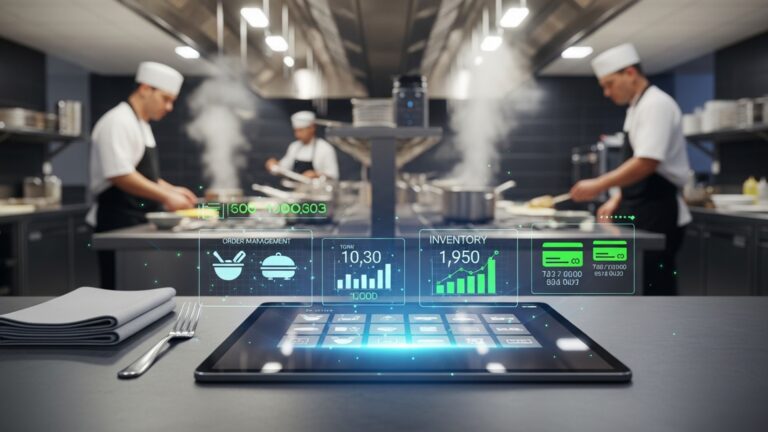
Inventory management is a common challenge for growing restaurants. Cloud based Restaurant POS software integrates sales and inventory data, providing accurate, real-time stock insights.
- Each sale automatically deducts ingredients from inventory.
- Low-stock alerts help prevent shortages.
- Waste and shrinkage become easier to track.
A mid-sized bistro reduced food waste by 18% after using POS-driven inventory reports to adjust portion sizes and supplier orders.
Studies show that published by Harvard Business Review, data-driven inventory management can significantly improve restaurant profit margins.
6. Seamless Integration with Online Ordering and Third-Party Apps
Modern diners expect convenience, including online ordering, delivery. digital payments. Cloud based Restaurant POS software is built to integrate with these platforms smoothly.
- Online ordering systems
- Delivery platforms like Uber Eats and DoorDash
- Accounting software such as QuickBooks
- Customer relationship management (CRM) tools
Manual order entry increases errors and labor costs. Integrated systems automatically sync orders, reducing mistakes and improving speed of service.
Toast and Square, two widely recognized POS providers, report that restaurants using integrated online ordering experience higher order accuracy and customer satisfaction.
7. Data-Driven Insights for Smarter Business Decisions
One of the most powerful benefits of cloud based Restaurant POS software is advanced reporting and analytics. These tools transform raw data into actionable insights.
- Best- and worst-selling menu items
- Peak service hours
- Labor cost percentages
- Customer purchase patterns
A casual dining restaurant used POS analytics to identify slow weekday afternoons. By introducing time-based promotions, they increased off-peak revenue without increasing labor costs.
McKinsey & Company emphasizes that data-driven decision-making enables businesses to outperform competitors by responding faster to market trends.
Regularly reviewing POS reports helps restaurant owners make informed decisions about pricing, staffing. marketing—critical factors for sustainable growth.
Conclusion
Cloud based restaurant POS software has quietly become the backbone of modern, fast-growing food businesses. From real-time sales tracking to effortless multi-location management, the biggest takeaway is simple: visibility drives smarter decisions. I’ve seen a café owner cut food wastage within a month just by checking cloud inventory reports on her phone during peak hours, a habit that’s now common as mobile-first management becomes a 2025 industry norm. When updates, online orders. customer data live in one secure cloud system, teams move faster and owners regain control without being tied to the counter. To make this work for you, start small. Activate only the features you’ll use daily, review reports weekly. keep staff training continuous. As discussed in How to Use Restaurant POS Features to Speed Up Orders and Payments, consistent usage is what turns software into real growth. With cloud POS evolving alongside AI-driven insights and integrations, now is the time to invest confidently, scale boldly. build a restaurant that’s ready for what’s next.
More Articles
How Restaurant POS Software Helps Small Restaurants Save Time and Reduce Costs
10 Ways Restaurant POS Software Improves Order Accuracy and Customer Satisfaction
7 Must Have Features to Look for in Restaurant POS Software
9 Practical Tips for Choosing Restaurant POS Software That Fits Your Business
8 Smart Ways Restaurant POS Software Helps Reduce Costs and Errors

FAQs
What does a cloud-based restaurant POS actually do?
A cloud-based restaurant POS manages orders, payments, inventory. sales data through the internet. Instead of being locked to one computer, the system stores data online so you can access it from multiple devices and locations.
How can a cloud POS help a growing restaurant save time?
It automates daily tasks like order tracking, sales reports. inventory updates. This reduces manual work, speeds up service. lets staff focus more on customers rather than paperwork.
Is cloud-based POS software useful if I have more than one location?
Yes, it’s especially helpful for multi-location restaurants. You can monitor sales, menus. performance across all locations from one dashboard without needing separate systems.
How does cloud POS software improve decision-making?
It provides real-time data and detailed reports on sales trends, popular menu items. peak hours. Having up-to-date insights makes it easier to plan staffing, pricing. inventory.
Can a cloud POS system grow with my restaurant business?
Cloud-based systems are designed to scale. You can add new terminals, locations, or features as your business expands without replacing your entire setup.
Does using a cloud POS help with inventory management?
Yes, it tracks inventory automatically as items are sold. This helps prevent stock shortages, reduces waste. makes reordering more accurate.
Is cloud-based restaurant POS software reliable during busy hours?
Most systems are built to handle high traffic and sync data quickly. Even during rush periods, they help keep orders flowing smoothly and reduce errors at the counter or kitchen.