7 Vital Features Every Business Needs in a POS Chennai System
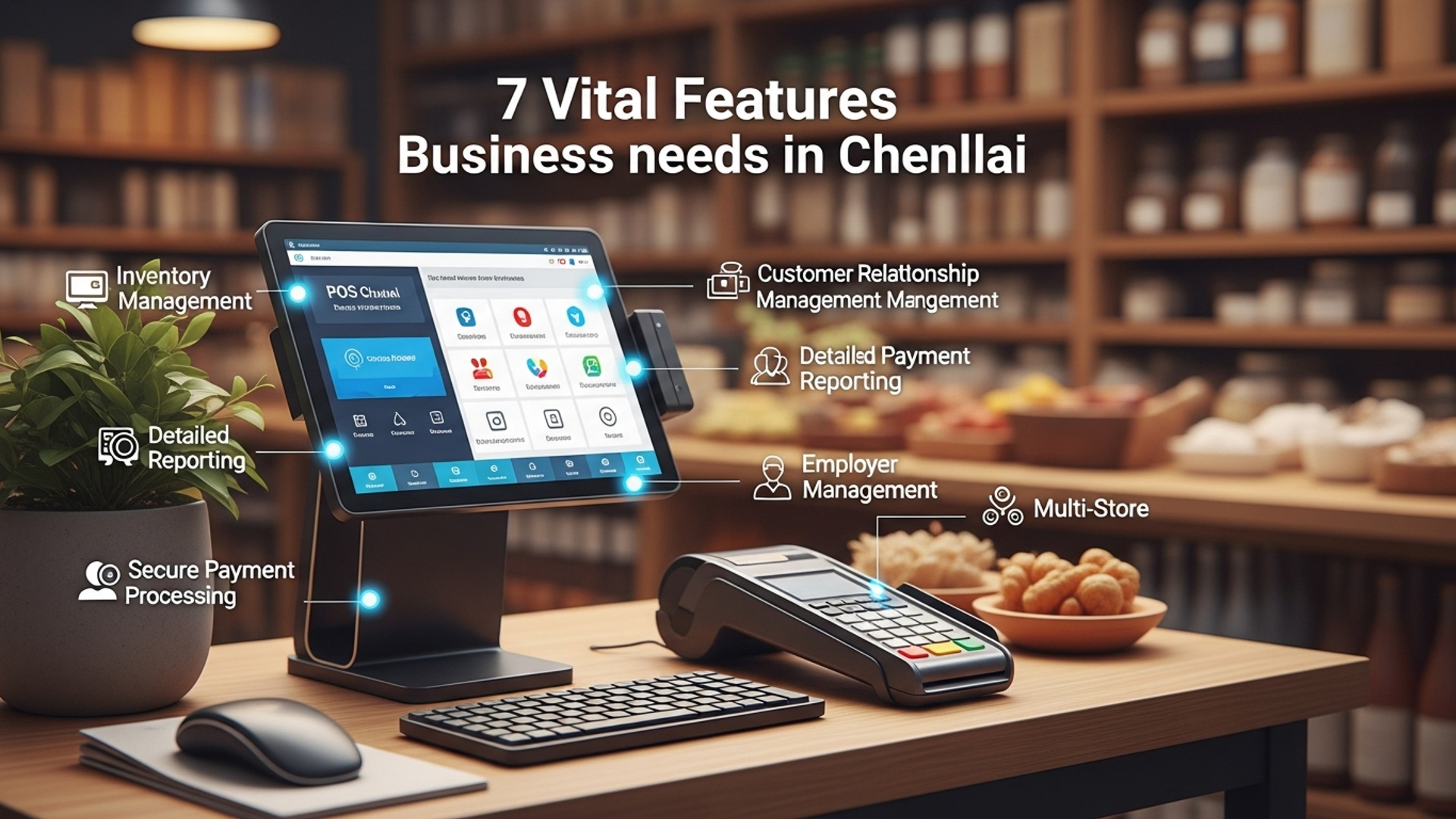
In Chennai’s dynamic business landscape, a cutting-edge POS Chennai system is paramount for operational efficiency and sustained growth. Modern businesses demand more than just transactional processing; they require an integrated platform that drives strategic insights. The rapid adoption of cloud-based solutions and real-time analytics underscores the critical need for features like comprehensive inventory management, robust CRM integration, secure payment gateways. scalable reporting. A truly effective POS system empowers businesses to adapt to fluctuating market trends, optimize customer experiences. make data-driven decisions that directly impact profitability. Ensuring your chosen system offers these crucial capabilities is vital for navigating the competitive Chennai market.

1. Comprehensive Inventory Management
For any business, especially in a bustling market like Chennai, efficient inventory management is the backbone of profitability. A top-tier pos chennai system should offer robust tools to track products, manage stock levels. prevent losses due to spoilage or theft. This isn’t just about counting items; it’s about optimizing your entire supply chain.
- Real-time Tracking
- Variant Management
- Vendor Management
- Stock Alerts
- Barcode Scanning Integration
Instantly know what’s in stock, what’s selling. what needs reordering. This is critical for businesses with high turnover, such as grocery stores or quick-service restaurants in Chennai.
Handle different sizes, colors, or styles of the same product with ease. Imagine a clothing boutique needing to track a dress in various sizes and colors; a good POS makes this seamless.
Keep records of your suppliers, order history. lead times directly within the system.
Automated notifications when stock levels hit predefined minimums, preventing out-of-stock situations that can disappoint customers and lose sales.
Speed up checkout and reduce manual errors during stock takes.
Consider a popular bakery in Anna Nagar. Without an integrated inventory system, tracking flour, sugar, eggs. specialty ingredients for various cakes and pastries would be a manual, error-prone nightmare. A robust POS allows them to track ingredient consumption per recipe, alert them when butter stock is low. even identify which pastries are most profitable based on ingredient cost and sales volume. This level of detail empowers the owner to make informed purchasing decisions and minimize waste.
Prioritize a POS system that offers detailed, real-time inventory control. Look for features that automate reordering and provide insights into your most profitable items. This will directly impact your bottom line and operational efficiency.
2. Seamless Integrated Payment Processing
In today’s digital economy, customers expect diverse and secure payment options. A modern POS system must integrate seamlessly with various payment gateways, offering flexibility and speed at the checkout counter. This goes beyond just accepting credit cards; it encompasses mobile payments, UPI. even nascent digital currencies, depending on your customer base.
- Multiple Payment Types
- PCI DSS Compliance
- Contactless Payments
- Tokenization & Encryption
- EMV Chip Card Compatibility
Support for credit/debit cards, mobile wallets (e. g. , Google Pay, PhonePe), UPI, cash. gift cards.
Ensure all transactions are secure and customer data is protected, building trust with your clientele.
Essential for speed and hygiene, especially relevant in post-pandemic consumer behavior.
Advanced security measures to protect sensitive cardholder data.
For enhanced security against fraud.
A small electronics store in T. Nagar struggled with slow payment processing and limited options, often losing sales when customers preferred UPI or specific card types not supported by their old terminal. Upgrading to a modern POS system with integrated payment processing meant they could accept virtually any payment method, process transactions in seconds. offer contactless options. This not only improved customer satisfaction but also reduced checkout times, allowing them to serve more customers during peak hours. The seamless integration meant fewer errors and easier reconciliation.
Evaluate potential POS systems for their payment integration capabilities. Ensure they support local payment methods popular in Chennai and adhere to the highest security standards. A system that streamlines payments will enhance customer experience and operational flow.
3. Robust Customer Relationship Management (CRM) Features
Building customer loyalty is paramount for sustained business growth. A powerful POS system extends beyond transactions to become a tool for understanding and engaging with your customers. Integrated CRM features allow businesses to personalize experiences, reward loyalty. foster repeat business.
- Customer Databases
- Loyalty Programs
- Targeted Marketing
- Feedback Collection
- Wishlists & Preferences
Store contact details, purchase history, preferences. special notes for each customer.
Implement points-based systems, tiered rewards, or member discounts to incentivize repeat purchases.
Use purchase data to segment customers and send personalized promotions or birthday offers via email or SMS.
Integrate tools to gather customer feedback directly at the point of sale or post-purchase.
Allow customers to save items they’re interested in, providing insights for future marketing efforts.
Imagine a popular bookstore on Khader Nawaz Khan Road. With a CRM-enabled POS, they can track which genres a customer frequently buys, recommend new arrivals based on past purchases. offer exclusive discounts on their favorite authors. When a loyal customer walks in, the staff can quickly pull up their profile, greet them by name. even suggest a new book based on their last purchase. This personalized touch transforms a transactional interaction into a relationship, significantly boosting customer retention and average spend.
Look for a POS system that empowers you to build stronger customer relationships. Features like loyalty programs, customer profiling. targeted marketing capabilities are investments that yield significant returns in customer retention and lifetime value.
4. Advanced Sales Reporting and Analytics for Your POS Chennai Business
Data is the new oil. for businesses in Chennai, understanding sales trends and operational performance is critical for competitive advantage. A superior POS system doesn’t just process sales; it transforms raw transaction data into actionable insights through comprehensive reporting and analytics.
- Real-time Sales Reports
- Product Performance
- Employee Performance
- Customer Insights
- Customizable Reports
- Export Functionality
Monitor daily, weekly. monthly sales performance, identifying peak hours and best-selling products.
comprehend which items are flying off the shelves and which are lagging, informing inventory and merchandising decisions.
Track individual sales metrics, helping identify top performers and areas for training.
examine purchase patterns, average transaction value. customer segments to refine marketing strategies.
The ability to create tailored reports that focus on specific KPIs relevant to your business model.
Easily export data for further analysis in other business intelligence tools.
“In today’s fast-paced retail environment, gut feelings aren’t enough,” states Dr. Priya Sharma, a retail analytics consultant. “Businesses need hard data to make smart decisions. A POS that provides deep, accessible analytics can be the difference between merely surviving and truly thriving.”
Comparison: Basic vs. Advanced Reporting
| Feature | Basic POS Reporting | Advanced POS Reporting |
|---|---|---|
| Sales Data | Total sales, daily summary | Hourly sales, sales by product, sales by employee, average transaction value, discount analysis |
| Inventory Insights | Current stock levels | Stock movement, dead stock analysis, reorder point suggestions, supplier performance |
| Customer Data | Basic purchase history | Customer segmentation, lifetime value, purchase frequency, loyalty program effectiveness |
| Customization | Limited pre-set reports | Fully customizable reports, drag-and-drop report builder, scheduled reports |
| Visualization | Simple tables | Interactive dashboards, charts, graphs (bar, pie, line) |
Don’t settle for basic sales totals. Invest in a POS system that offers comprehensive, customizable reporting and analytics. This will empower you to identify opportunities, mitigate risks. make data-driven decisions that propel your business forward.
5. Cloud-Based Accessibility with Robust Offline Mode
The modern business landscape demands flexibility and resilience. A cloud-based POS system offers unparalleled accessibility, allowing you to manage your business from anywhere, at any time. But, acknowledging the occasional internet connectivity challenges, especially in diverse urban environments, a robust offline mode is equally vital.
- Remote Access
- Automatic Updates
- Data Security & Backup
- Scalability
Monitor sales, manage inventory. update product data from your office, home, or while traveling.
Software updates and security patches are handled automatically by the provider, ensuring you always have the latest features and protection.
Your data is securely stored in the cloud, protected against local hardware failures or theft, with regular backups.
Easily add new terminals or locations as your business grows without significant infrastructure investment.
- Uninterrupted Sales
- Data Synchronization
- Reliability
Continue processing transactions even if your internet connection drops, saving sales and preventing customer frustration.
Once connectivity is restored, all offline transactions automatically sync with the cloud, ensuring data consistency.
Provides peace of mind, knowing your operations won’t grind to a halt due to network issues.
Imagine a pop-up store or a food truck operating at a festival in Besant Nagar. Internet connectivity can be spotty. A cloud POS with a strong offline mode allows them to process orders, accept payments. manage inventory seamlessly. All transaction data is stored locally and then uploaded to the cloud once they return to a stable internet connection. This ensures no sales are lost and all data is eventually reconciled, providing a complete picture of their festival performance.
When choosing a POS, prioritize a solution that offers the best of both worlds: the flexibility and security of cloud-based operations combined with a reliable offline mode. This ensures continuous service and data integrity, irrespective of internet availability.
6. Scalability and Seamless Integrations
As your business evolves, your POS system must evolve with it. Scalability ensures that the system can handle increased transaction volumes, additional locations. new functionalities without requiring a complete overhaul. Equally vital is the ability to integrate with other essential business tools, creating a cohesive operational ecosystem.
- Multi-Location Support
- User Accounts
- Hardware Compatibility
- Transaction Volume
Manage multiple stores or branches from a single dashboard.
Easily add or remove staff accounts with varying access permissions.
Support for additional peripherals (printers, scanners, payment terminals) as needed.
The system should be able to process a growing number of transactions without performance degradation.
- Accounting Software
- E-commerce Platforms
- CRM Systems
- Employee Management/HR
- Third-Party Apps
Sync sales data directly with platforms like Tally, Zoho Books, or QuickBooks to streamline bookkeeping and financial reporting. For example, a restaurant in Mylapore might integrate its POS with Tally to automate daily sales entries.
Unify online and in-store sales, inventory. customer data (e. g. , Shopify, Magento). This is crucial for businesses with an omnichannel presence.
Deeper customer insights and marketing automation (as discussed in feature 3).
Integrate time tracking, payroll. scheduling tools.
Connect with specialized apps for loyalty, delivery, reporting, or specific industry needs.
A growing boutique chain in Chennai started with one store and a basic POS. As they expanded to three locations and launched an online store, their old system couldn’t cope. They upgraded to a scalable POS that integrated with their e-commerce platform and accounting software. Now, inventory updates automatically across all channels, sales figures are synced directly to their accounting software. customer loyalty points are consistent whether a purchase is made online or in-store. This seamless integration saved countless hours of manual data entry and provided a unified view of their entire business.
Choose a POS system with an eye on the future. Ensure it can scale with your business growth and offers robust integration capabilities with other essential software. An open API (Application Programming Interface) is a strong indicator of good integration potential, allowing developers to connect custom solutions.
// Example of a basic API call for product inventory (illustrative, not specific POS code) GET /api/v1/products/{productId}/inventory
Host: yourposapi. com
Authorization: Bearer YOUR_API_KEY
Content-Type: application/json // Expected Response (example)
{ "product_id": "SKU12345", "product_name": "Organic Coffee Beans - 500g", "current_stock": 75, "location": "Main Store Chennai", "last_updated": "2023-10-27T10:30:00Z"
}
7. Intuitive User Interface and Comprehensive Training
The most feature-rich POS system is useless if your staff can’t operate it efficiently. An intuitive user interface (UI) is paramount for quick adoption, reduced training time. minimized errors. Coupled with comprehensive training and support, it ensures your team can leverage the system’s full potential, leading to smoother operations and better customer service.
- Clean & Uncluttered Layout
- Touchscreen Optimization
- Customizable Layouts
- Visual Cues
- Minimal Clicks
Easy to navigate with clearly labeled buttons and logical workflows.
For speed and ease of use, especially in fast-paced retail or restaurant environments.
The ability to arrange frequently used functions or product categories for quicker access.
Color-coding, icons. clear typography to guide users.
Streamlined processes that require fewer steps to complete a transaction or task.
- Onboarding Resources
- Live Training
- Responsive Customer Support
- Regular Updates & Documentation
Access to guides, video tutorials. FAQs for self-paced learning.
Initial training sessions for new staff or when new features are rolled out.
Access to technical assistance via phone, email, or chat for troubleshooting and urgent issues.
Keeping users informed about new features and how to use them.
“When we first implemented a new POS in our gift shop in Nungambakkam, there was initial resistance from some older staff members who were used to our antiquated system,” recounts Ms. Lakshmi, a shop manager. “But, the new system’s interface was so straightforward – large buttons, clear product images. simple steps for returns – that within a week, everyone was comfortable. The vendor also provided excellent video tutorials, which helped immensely. It significantly reduced transaction times and virtually eliminated pricing errors.”
Before committing to a POS, request a demo and involve your staff in the evaluation process. Pay close attention to the user interface and the ease of performing common tasks. Enquire about the vendor’s training and ongoing support offerings. A user-friendly system with strong support will minimize friction and maximize productivity for your team.
Conclusion
The journey to selecting a POS for your Chennai business isn’t merely about finding a cash register; it’s about empowering your operations for tomorrow’s market. My personal tip? Look beyond basic transaction processing. Consider how a system handles specific challenges unique to Chennai, like integrating local delivery services seamlessly or managing peak festival rushes efficiently through robust inventory and staff management modules. Recent trends clearly show businesses thriving with cloud-based systems that offer real-time analytics, allowing you to quickly adapt, much like a local eatery might pivot its menu based on popular online orders and immediate feedback. Embrace a system that not only processes sales but also provides the actionable insights needed to truly scale. The right POS is your strategic partner, ready to unlock unprecedented growth and efficiency for your enterprise. Go ahead, make that informed choice and watch your business flourish!
More Articles
Top 7 Benefits of Using Modern POS Software for Your Chennai Business
5 Key Benefits of Implementing POS Software Chennai Businesses Need
Why Every Chennai Business Needs Reliable POS Software Now
Unlocking Growth 8 Ways Retail POS Software Chennai Boosts Your Store

FAQs
Why is accurate inventory tracking a must-have for businesses in Chennai?
Keeping tabs on your stock is super essential! A good POS system helps you avoid running out of popular items, reduces waste from overstocking. even alerts you when it’s time to reorder. This means happier customers and a healthier bottom line for your business.
How can a POS system actually help me interpret my sales better and make smarter decisions?
A vital POS feature is its robust reporting. It breaks down your sales data, showing you what’s selling, when. to whom. You can spot trends, identify your best-performing products. comprehend peak hours, all of which helps you strategize for growth and profitability.
What benefits do customer relationship management (CRM) tools in a POS offer to my business?
CRM features let you build stronger relationships with your customers. You can track purchase history, offer loyalty programs. send targeted promotions. This personalized approach can boost customer retention and encourage repeat business, making them feel valued.
Can a modern POS system in Chennai handle all the different payment methods customers expect today?
Absolutely! A top-tier POS system should support a wide range of payment options, from cash and card payments (credit/debit) to UPI, mobile wallets. other digital payment solutions popular in India. This flexibility makes transactions smooth and convenient for everyone.
Is it really necessary for my POS system to be cloud-based, or is a traditional setup good enough?
Going cloud-based offers huge advantages. You can access your sales data, inventory. reports from anywhere, anytime, using any device with an internet connection. It also means automatic updates, better data security. easier scalability without heavy IT infrastructure, which is a big plus for busy business owners.
How does a POS system help with managing my staff effectively?
Many POS systems come with features to streamline employee management. You can track clock-ins and outs, manage shifts, assign roles. even monitor individual sales performance. This helps improve accountability, payroll accuracy. overall operational efficiency.
My business is growing; will a good POS system be able to keep up and integrate with other tools I use?
A truly vital POS feature is its scalability and ability to integrate. It should grow with your business, handling increased transaction volumes and more users. Plus, seamless integration with accounting software, e-commerce platforms, or other business tools ensures a unified and efficient operation without manual data transfers.